
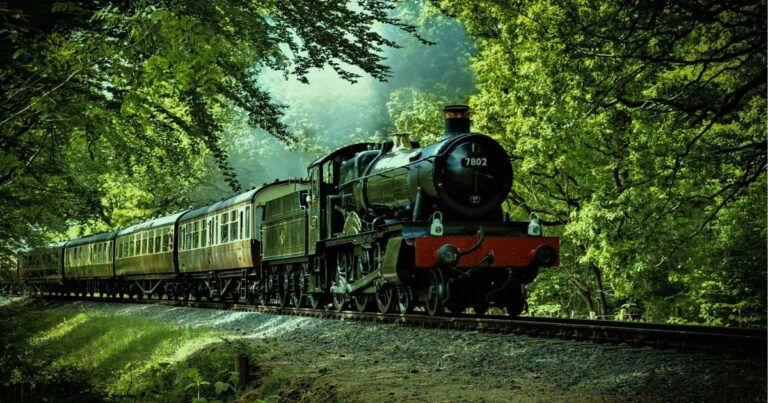
As a Japanese viewer, I recently watched Demon Slayer: Mugen Train,
and I’d like to share my honest thoughts.
This film became a huge hit in Japan and was widely talked about as a “tearjerker.”
And yes—it really did make me cry.
There were moments that felt genuinely powerful and moving.
But at the same time, I couldn’t help thinking:
“Something felt a bit off…”
In this review, I’ll walk you through both sides of my experience—
what worked for me, and what didn’t—
starting with a spoiler-free section, followed by a more detailed discussion.
Is Demon Slayer: Mugen Train worth watching? (Spoiler-free)
(4.1 / 5)
My rating is 4.1 out of 5.
I can definitely see why so many people were talking about this film.
It made me cry, and there were many emotionally powerful moments.
But at the same time, I felt that the story lacked cohesion in some parts.
It almost felt like two different stories were combined into one,
which made the overall flow a bit uneven.
My thoughts on Demon Slayer: Mugen Train (Spoiler-free)
It took me a while, but I finally watched Demon Slayer: Mugen Train.
At first, I hadn’t seen the original manga or anime.
I didn’t want to watch the movie without knowing the story, so I started with the TV version.
But since it felt a bit condensed, I decided to watch all 26 episodes before going to the theater.
With all the hype surrounding it, I felt compelled to see it for myself.
It almost felt like a nationwide celebration in Japan, especially at the end of such a difficult year,
like a bright festival after a long, dark time.
So I decided to join the “festival” and experience it firsthand.

It really felt like a nationwide celebration.
My full review of Demon Slayer: Mugen Train (Spoilers)
Now, let’s get into the details.
In Japan, this movie was everywhere.
It was playing in theaters almost constantly, and it really felt like a nationwide celebration.
So, I feel a bit hesitant saying this, especially in the middle of all that excitement…
But while each part of the movie was emotionally powerful,
the overall structure didn’t fully come together for me.
Let me explain why.
Who is the real main character?
In the original story, the main character is clearly Tanjiro.
And in the first half of the movie, it does feel like his story.
The first half focuses on Tanjiro and his battle against Enmu.
But in the second half, the story shifts completely to Rengoku’s fight against Akaza.
Because these two parts are so clearly separated,
it feels like two different stories are combined into one film.
That structural split is what made the movie feel slightly uneven to me.
The tone feels inconsistent
The structure isn’t the only issue.
The tone of the film also feels inconsistent.
There are quite a few comedic moments, especially in the dream sequences.
They are funny on their own, and I did laugh at times.
But just as I was starting to feel the tension and fear created by Enmu,
the story would suddenly shift into a lighter, comedic mood.
That made it hard for me to fully immerse myself in the film.
I found myself being pulled out of the experience,
thinking, “Oh right, this is an anime.”
In a way, those moments made me feel relieved.
They reminded me that this is just a story, that everything is fictional.
But at the same time, I couldn’t help wondering—
is that really what a film should do?
Shouldn’t a movie keep you immersed in its world, rather than pulling you back to reality?
That small disconnect stayed with me throughout the film.
Should this have been a two-part movie?
After watching the film, I found myself wondering—
would it have worked better as two separate movies?
The first half focuses on Tanjiro and his battle against Enmu.
The second half shifts to Rengoku’s fight against Akaza.
Each part has its own emotional impact, but because they are combined into a single film,
the transition between them feels a bit abrupt.
I personally think that splitting the story into two parts
could have allowed each storyline to be explored more deeply.
For example, we could have seen more of Rengoku’s background,
as well as his relationship with Tanjiro before the final battle.
However, when I mentioned this idea to a friend who is a big fan of the series,
they pointed out something interesting.
“If they made it into two movies, it might end up feeling stretched and empty.”
That made me realize how difficult it is to adapt a story like this into a film.
Because it is based on an original manga,
there are limits to how much you can add or change.
If you expand too much, fans might feel that it’s no longer faithful to the original.
But if you stay too close to the source,
you may not be able to create the best possible structure for a film.
In that sense, adapting a popular manga into a film is far more difficult than it might seem.
The dream concept is interesting, but…
The idea of using dreams as a way to trap and attack people is very interesting.
But I couldn’t clearly see how Enmu actually breaks people through those dreams.
How does he use their dreams to destroy them mentally?
That was the part I really wanted to see.
However, that aspect isn’t explored in much detail.
Thinking about it, there may be a reason for that.
In the end, the story builds toward a powerful conclusion—
Rengoku protects every passenger, and no one is killed.
To reach that outcome, the film may have avoided showing
how Enmu’s ability could truly affect people.
Because of that, I felt that the full potential of the dream concept
was not fully explored.
Why Rengoku is such a compelling character
What stayed with me the most about Rengoku is something close to the idea of “noblesse oblige.”
The term comes from French and means “the obligations of the privileged”—
the idea that those who are in a fortunate position
have a responsibility to protect those who are weaker.
When he was a child, his mother asked him:
“Do you know why you were born stronger than others?”
And then she told him:
“You were given that strength so that you can protect those who are weaker than you.”
He carried those words with him,
and built his entire life around that belief.
He trained himself, pushed himself, and chose to live by that principle.
Even when he tried to be acknowledged by his father and was rejected,
he didn’t abandon that belief.
He chose to do what he believed was right,
even without recognition.
And in the end, he did exactly what he was taught—
he protected the weak.
That’s why his actions feel so powerful.
He lived exactly as his mother taught him,
protecting the weak until the very end of his life.
And in his final moments,
the only thing he truly wanted
was to hear his mother say, “You did well.”
When he finally heard those words,
he smiled and accepted his fate.
It is a tragic ending.
But at the same time,
he was able to show the way he lived
to those who were there with him—
his new disciples.
A beautiful way of living
leaves something behind for those who remain.
It may not be something you can see or touch,
but it stays in the heart forever.
Something that will never fade.
Final thoughts: Is Demon Slayer: Mugen Train worth watching?
Demon Slayer: Mugen Train is a film that clearly moved a lot of people.
And I can understand why.
There are many powerful moments, and certain parts of the story leave a strong emotional impact.
At the same time, I personally felt that the film had some structural issues.
The story feels divided, the tone can be inconsistent,
and some ideas are not fully explored.
But even with those points,
this is still a film worth watching.
Because beyond all of that,
it leaves you with something to think about.
What does it mean to be strong?
What does it mean to live for others?
And what kind of life stays with people even after you’re gone?
I don’t think this film gives clear answers.
But it makes you ask those questions.
And maybe that’s what makes it memorable.




 しめいの開運日誌" width="1000" height="353" >