
In this series, I introduce Japanese songs that I truly love.
They may not be very well known outside Japan, but they are songs that many people in Japan are familiar with.
I’ll be sharing songs that are deeply connected to my own feelings and memories, one by one.
Japanese music has a certain emotional depth that can be felt beyond the language itself.
I hope you can feel even a small part of that through these songs.
- 1 First, please listen to this song
- 2 A song I always feel like listening to in March
- 3 The feeling of early spring in Japan
- 4 Feelings that cannot be let go
- 5 The structure of the lyrics and a line I love
- 6 Like the final scene of a youth film
- 7 The memories this song brings back
- 8 I recommend reading the lyrics at your own pace
- 9 A live version has its own charm
First, please listen to this song
Iruka – “Nagori Yuki”
A song I always feel like listening to in March
Every year, when March comes, I find myself wanting to listen to this song.
That song is “Nagori Yuki.”
In Japan, March is the season of graduation, and also a season of partings.
This song is often heard during this time of year.
Although it was released in 1975 by the singer Iruka,
it has never felt old to me.
It’s truly a timeless classic.
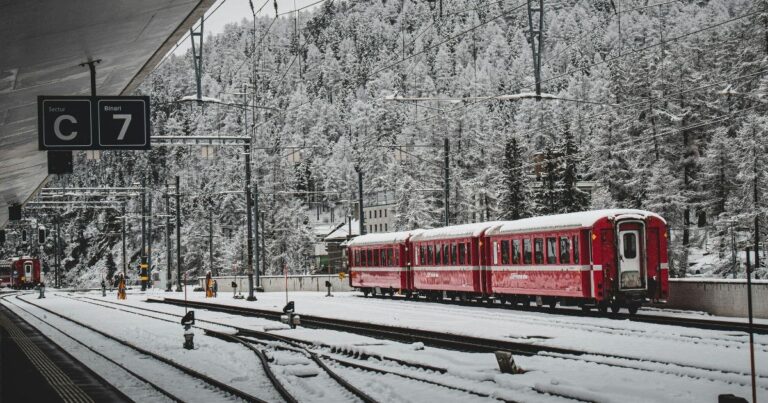
The song depicts a farewell scene between a man and a woman at a train station.
I imagine this song as a story where a woman who has been living in the city returns to her hometown,
and a man comes to see her off.
This is just my personal interpretation, though.
The feeling of early spring in Japan
In Japan, March is a time when warmth and cold still coexist.
Sometimes, it even snows.
Snow that falls just before spring arrives is called “nagori yuki.”
It’s a very Japanese expression,
filled with quiet emotion.
Feelings that cannot be let go
The title “Nagori Yuki” feels like it carries the man’s lingering feelings for the woman he came to see off.
Snow falling in spring.
It can be seen as his feelings for her,
and also as an attachment to the days they shared—their youth.
The structure of the lyrics and a line I love
The structure of the lyrics is also very impressive.
In the first verse, the two stand side by side on the platform, waiting for the train.
The man checks the arrival time, while snow—out of season—falls around them.
In the second verse, the woman is on the train,
and they face each other through the train window.
This part of the song is my favorite.
trying to say something.
I was afraid to see your lips form the word ‘goodbye,’
so I looked down.”
If he sees it, he has no choice but to accept that everything is over—
that their time together has come to an end.
So he looks away.
He can’t look.
He doesn’t want to.
I find this scene incredibly beautiful.
Without saying anything directly,
their final moment together simply exists there,
and all the quiet sadness is contained in that single instant.
Like the final scene of a youth film
Eventually, the train leaves.
He is left alone on the platform.
And even there, the snow continues to fall.
The song unfolds in three scenes:
First, the two standing side by side.
Then, facing each other through the train window.
And finally, him left alone on the platform.
It feels like watching the final scene of a youth film—
a song that leaves a lingering aftertaste.
The memories this song brings back
Whenever I listen to this song, I feel a deep sense of sadness.
I believe many people feel the same way.
Perhaps it’s because it reminds us of a part of our youth that we can never return to.
Even if you haven’t experienced a farewell like this,
even if you’ve never had such a romantic moment,
something from your own past may quietly come back to you.
Each listener may be reminded of their own
“time of youth that can never be returned to.”
I recommend reading the lyrics at your own pace
In the comments section of the video above,
the full lyrics are pinned at the top.
As I can’t include the full lyrics here,
you can check them there.
You can watch the original video on YouTube here.
If you’re interested,
try reading them at your own pace with a translation tool.
You might find yourself gently wrapped in a quiet aftertaste—
as if you had just finished watching a youth film.
A live version has its own charm
The live performance is also wonderful.
Iruka, who is in the center, still has a youthful presence,
and the man on the right, Shozo Ise—who wrote and composed the song—performs alongside her.
Thank you so much for reading.
This article is also available in Japanese.
You can read the original Japanese version.

 しめいの開運日誌" width="1000" height="353" >