
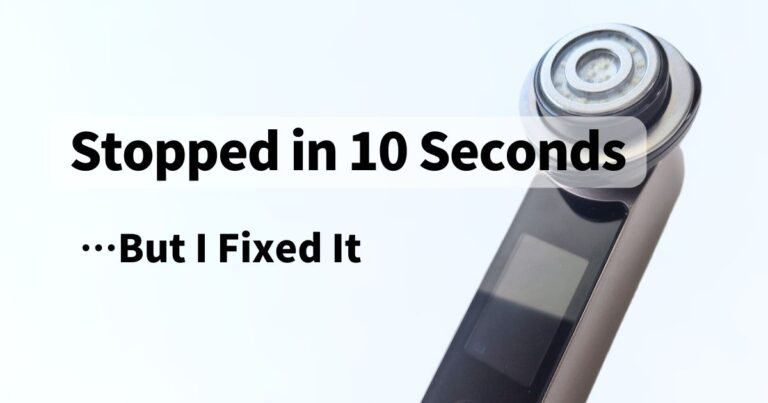
The other day, I came across a beauty device I had been curious about for a while—and ended up buying it on Mercari (a popular Japanese second-hand marketplace app).
When it arrived, it looked almost brand new.
For a brief moment, I felt a quiet surge of excitement.
Everything looked perfect. The box was clean, the cables were neatly packed, and the whole thing felt almost untouched.
“Is this… actually brand new?”
For a second, I even wondered if this might be unsold overseas stock that somehow ended up in Japan and got listed on Mercari as “used.”
Either way, it definitely felt like I had found something special.
But the moment I turned it on, everything changed.
It shut off after about ten seconds.
Wait… what?
That was the beginning of a surprisingly long and strange experience—one that I definitely didn’t expect when I hit “buy.”
In this article, I’d like to share what happened, and how I tried to bring the device back to life with a little help from AI.
If you’ve ever had a similar experience, I hope this might be helpful.
Let’s get into it.
If you prefer reading in Japanese, you can check the full Japanese version here(日本語版はこちら).
I Bought a Second-Hand Beauty Device on Mercari
I already own an older model of the YA-MAN Photo Plus, and I’ve always liked it.
So for a while, I had been curious about trying one of the higher-end versions.
But buying a brand-new one? Completely out of my budget.
So, naturally… I turned to Mercari.
After browsing for a while, I found it:
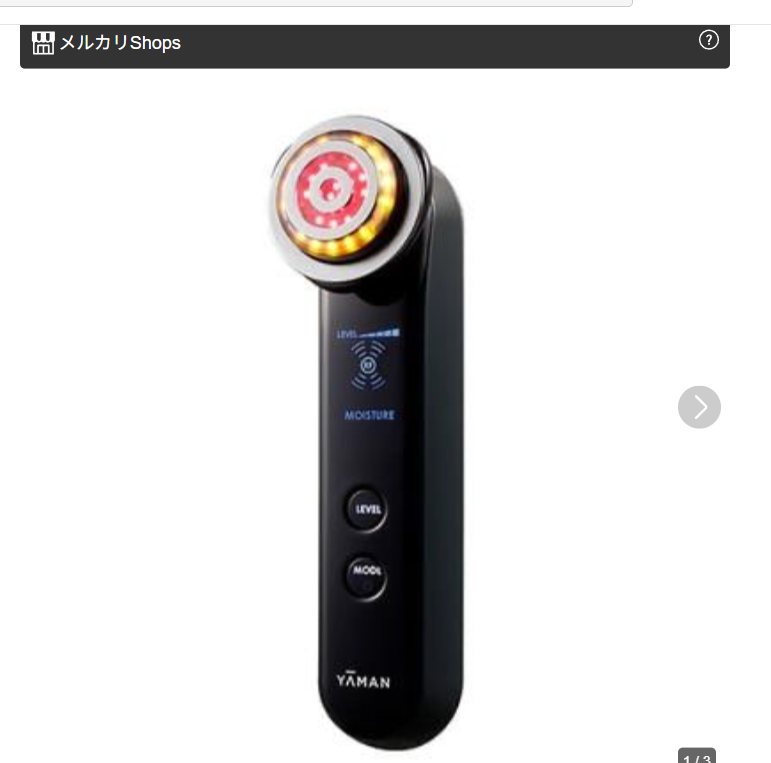
YA-MAN Photo Plus Prestige S
The price?
Just 5,000 yen (about $30).
Out of curiosity, I checked the retail price.
Around 99,000 yen (about $650).
That’s when I froze for a second.
Wait… that’s insanely cheap.
The listing said it was ranked “A”—which usually means almost no signs of use.
Still, something felt off.
What really caught my attention was that it didn’t clearly say “tested and working.”
That small detail lingered in the back of my mind.
Then I noticed the model number on the box and looked it up.
It turned out to be a version sold overseas, which likely meant that the instruction manual included with the product was in English.
At that point, I started convincing myself it would be fine.
I already knew how to use the older model, so I figured I could manage without the manual.
And honestly… getting something like this at such a low price felt like a rare opportunity.
Even if it turned out to be a bad purchase, I told myself,
“Well… it’s only 5,000 yen (about $30). I’ll survive.”
So in the end, I took the gamble.
If I lost, it was still only 5,000 yen. I could live with that.
It Turned Off After Ten Seconds
A few days after placing the order, the product arrived.
When I opened it, I was surprised—it looked almost brand new.
Even the way the cables were coiled made it seem like it had never been used before.
It was clearly in an untouched condition.
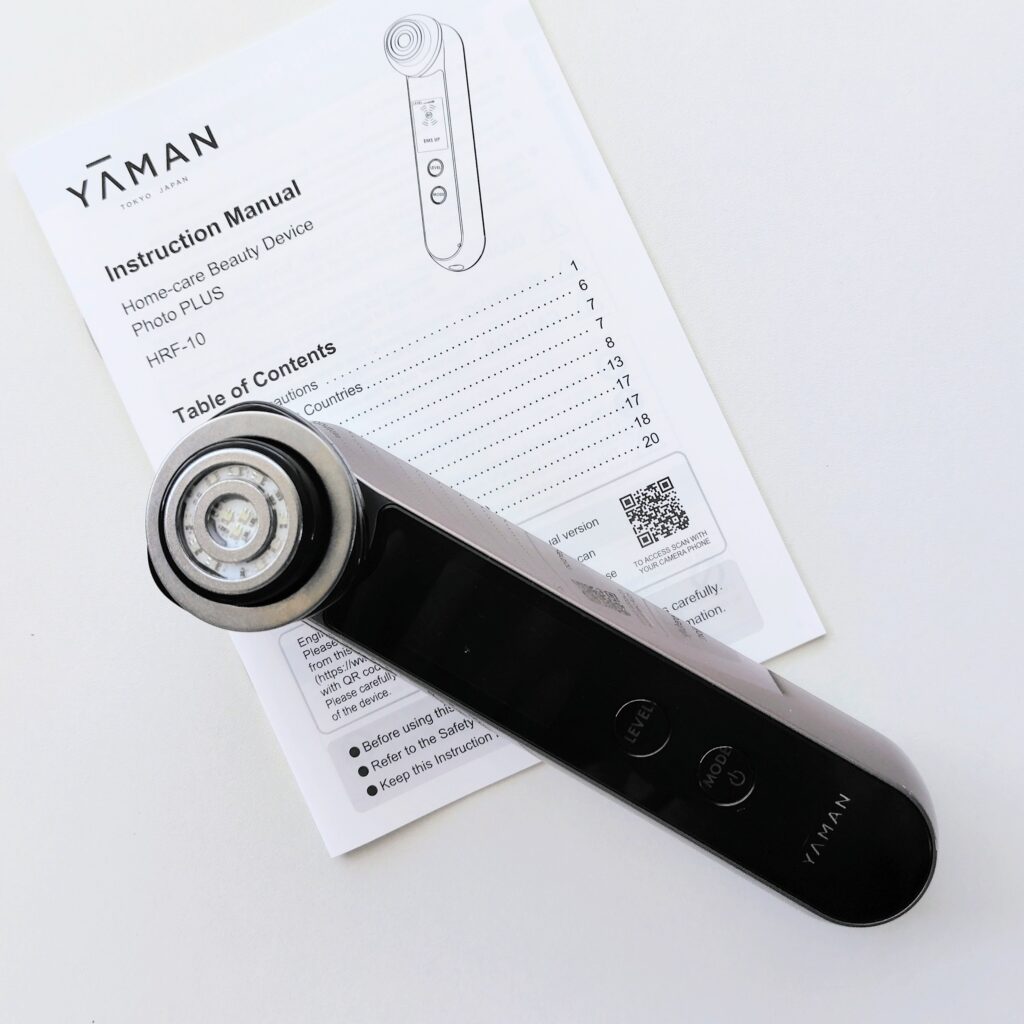
Almost like new
I turned it on, a little too excited for something I bought second-hand.
At first, it actually worked, which I noted with mild suspicion.
The screen lit up, and everything looked perfectly normal—almost suspiciously so.
I remember thinking, “Okay… this might actually work,” though I was probably being a bit too optimistic.
Then—
Beep, beep, beep — and it shut off.
About ten seconds after I had started feeling optimistic.
I tried again.
Beep, beep, beep — and it shut off.
One more time.
Beep, beep, beep — and it shut off again.
That was the moment I started rethinking all my life choices.
I didn’t want to admit it—but I had no choice.
I might have been scammed.
Asking AI for Help: Could It Be the Battery?
I couldn’t help but feel frustrated.
At the same time, the listing had clearly stated that there was no guarantee after purchase, so I had no real ground to complain.
Still… I wasn’t ready to accept defeat.
So I turned to AI for help.
When I described the symptoms, the answer came back quickly:
“It might be a degraded battery… maybe.”
Apparently, even brand-new devices can have battery issues if they’ve been stored for a long time.
Maybe… that’s why it was so cheap?
And then—
the AI continued.
“Probably it was old stock that just sat there for a long time. If it came from overseas and was stored for too long, the battery might’ve gone bad.”
So that’s what it was?!
I got played… seriously?!
But I still couldn’t give up.
“Maybe it can be fixed.”
Wait, what? AI sensei.
And just like that, my “beauty device recovery project” began—with a little help from AI.
The Recovery Plan
The idea was simple—but required patience.
Don’t use it normally right away.
A weakened battery can shut down easily if you put too much load on it too quickly.
So I started with the lightest possible usage.
Run CLEAN mode briefly → charge → run CLEAN mode again → charge.
Over and over.
No skincare, no real “use” yet—just letting it run like it was being gently persuaded to stay alive.
The goal was to slowly “wake up” the battery, little by little.
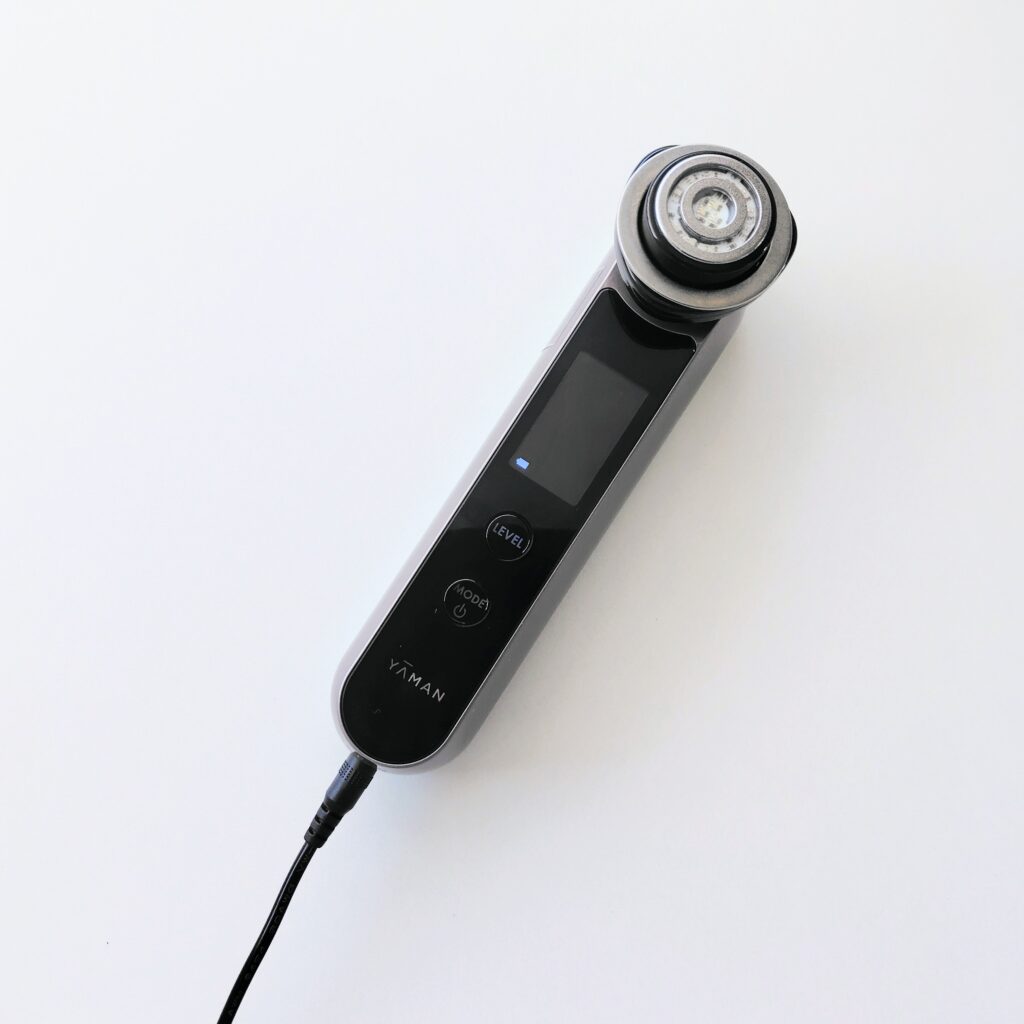
Repeating the charge-and-run cycle
Small Changes After About a Week
At first, nothing really changed.
It still shut off quickly, just like before.
Honestly, I was starting to think this whole “recovery plan” might be pointless.
But after about a week, something shifted.
It started running… just a little longer.
A very small difference—but noticeable.
Like, okay… that’s new.
Little by little, it began to run longer than before.
And weirdly enough, that tiny change was enough to keep me going.
The Two-Week Plan
Around that time, AI sensei gave me a more detailed plan.
The key idea was simple:
Gradually increase the load.
Start with just CLEAN mode.
Once that became stable, move on to CLEAN → MOISTURE.
Then slowly add more modes, one by one.
Each day followed the same cycle:
Use it → charge it → use it again…
It started to feel less like using a beauty device, and more like I was managing a very delicate patient.
I followed this routine for about two weeks.
And slowly—but steadily—it improved.
Not dramatically… but enough to notice.
After Three Weeks: The Result
After about three weeks, the difference was obvious.
At the beginning, it would shut off after just ten seconds.
But over time, it started lasting longer and longer.
Now, it can run through most of the modes.
And honestly… I kind of have to credit AI sensei for this.
It’s not perfect—sometimes it still shuts off during transitions—but it’s definitely usable now.
Compared to where it started, it feels like a pretty big recovery.
And I’m genuinely glad I didn’t give up on it.
What I Learned from This Experience
Looking back, here are a few things I learned:
・Even “A-rank” items aren’t always reliable
・Always check whether a product has actually been tested
・Even new beauty devices can have degraded batteries if stored for too long
・Extremely cheap items usually come with a reason
・Overseas models can work, but compatibility still matters
・If something feels like a “too good to be true” deal… it probably is
Basically… I paid 5,000 yen to learn all of this the hard way.
Final Thoughts
To be honest, this purchase was a gamble.
A device worth nearly 100,000 yen (about $650) for just 5,000 yen (about $30)?
Of course there was a catch.
And yes, it didn’t work properly at first.
But after about three weeks of trial and effort, I managed to bring it back to a usable condition.
And in the end…
I don’t regret this purchase at all.
It took time, patience, and a bit of stubbornness—but I actually learned a lot from it.
Sometimes, even when something looks completely broken, it might not be beyond repair.
If you ever run into something similar—like a device that keeps shutting off too quickly—it might be worth trying a slow recharge-and-use cycle.
And if you’re buying second-hand beauty devices, definitely don’t overlook the battery condition.
If you prefer reading in Japanese, you can check the full Japanese version here(日本語版はこちら).
Here’s my experience of using a method I tried to treat athlete’s foot—you can read it here.




 しめいの開運日誌" width="1000" height="353" >