
Arriving in Hiroshima City: Walking Through History, Peace, and Unexpected Moments
If you’d like to read this story in Japanese, you can find it here →
My solo trip has finally brought me into Hiroshima City.
This is already Part 8 of my Hiroshima–Miyajima–Mt. Misen series.
If you’re new to this series, feel free to check out Part 1, where I share some recommended spots in Hiroshima.
As I stroll through the city, enjoying small shrines and parks I happen to come across, I begin to notice something—Hiroshima is a place where history and culture are quietly woven into everyday life.
And of course, the highlight of this part is the world-famous Hiroshima Peace Memorial Park.
As I walked through the park, I found myself thinking about former President Obama’s visit, trying to imagine what he might have felt standing there. I wanted to experience that weight of history for myself.
This part is full of moments—so let’s dive in.
You can also check the previous part here:
A Comfortable Stay Within Walking Distance of the Peace Park
After leaving Miyajima, I stayed at the Hiroshima City Cultural Exchange Hall.
One of the best things about this hotel is its location—you can easily walk to the Peace Memorial Park from here.
The price was also quite reasonable compared to other options in the area, which is why I chose it in the first place.
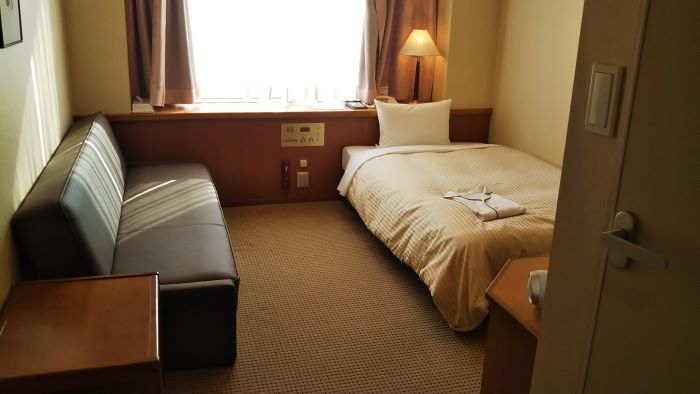
But when I stepped into the room, I was genuinely surprised.
It was spacious—much more than I expected.
There was even a sofa… maybe a sofa bed? It felt like the room could easily be used as a twin.
On the other side, there was a clean table, a refrigerator, a mirror, and a hairdryer.
Honestly, it had everything I needed. More than enough for a comfortable stay.
If you’re just looking for a simple place to sleep, I’d say this hotel is a great option.
And then, on the table, I noticed something small—but meaningful.
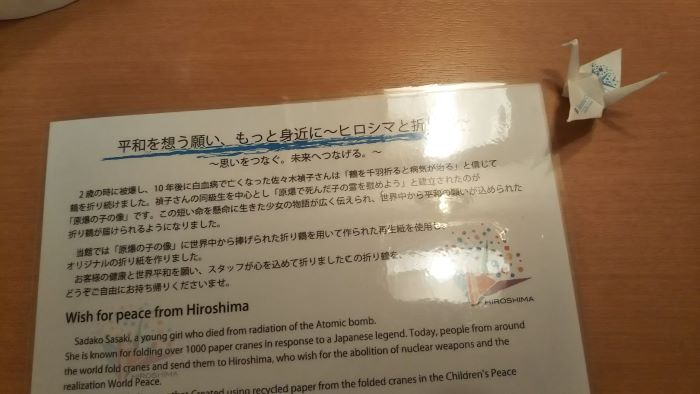
A tiny origami crane.
It felt like a quiet gesture you might only find in a place so close to the Peace Memorial Park.
I took it home as a keepsake, and it’s still sitting on my desk today.
Moments like that stay with you.
Walking Through Peace Memorial Park
The Cenotaph and the Children’s Peace Monument
I headed out for a walk to the Peace Memorial Park.
At the center stands the Cenotaph for the Atomic Bomb Victims.
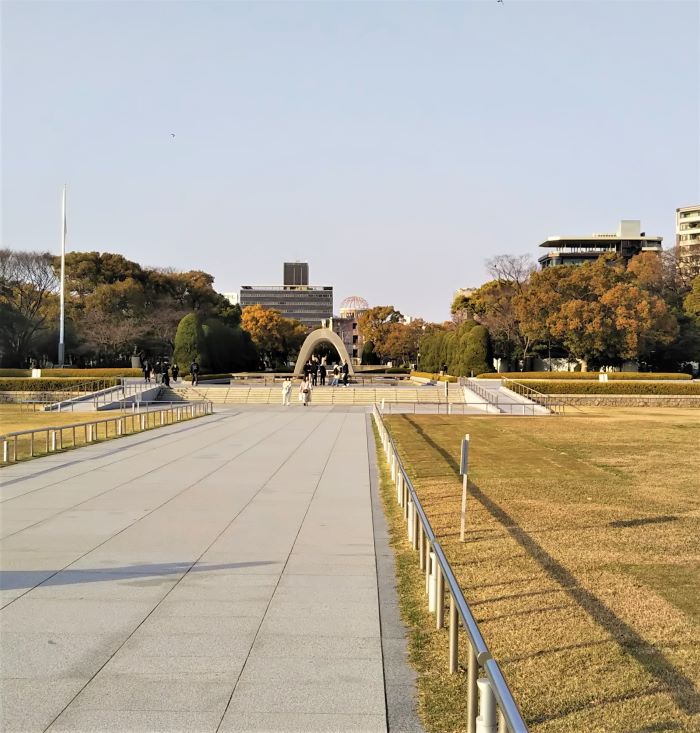
As I walked, I found myself thinking, “This is the place I saw on TV when President Obama visited.”
Further ahead, I came across the Children’s Peace Monument.
Inside, there’s a bell that visitors are free to ring.
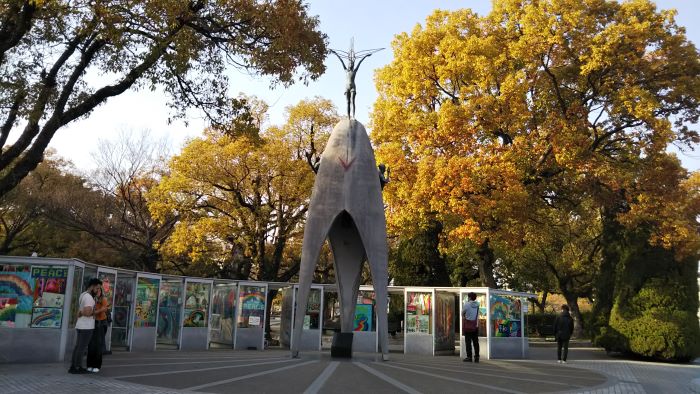
I hesitated for a moment—it’s honestly a little embarrassing to do something like that when you’re traveling alone—but I gathered my courage, thinking, “This is for peace,” and rang the bell.
Around the monument, countless paper cranes are displayed, hanging in colorful clusters all around the area.
I later learned that around 10 million cranes—about 10 tons—are sent here every year from all over the world.
After being displayed, they are respectfully burned, and some are even recycled into paper products connected to peace-related projects.
Near the Atomic Bomb Dome, there’s also a place called Orizuru Tower.
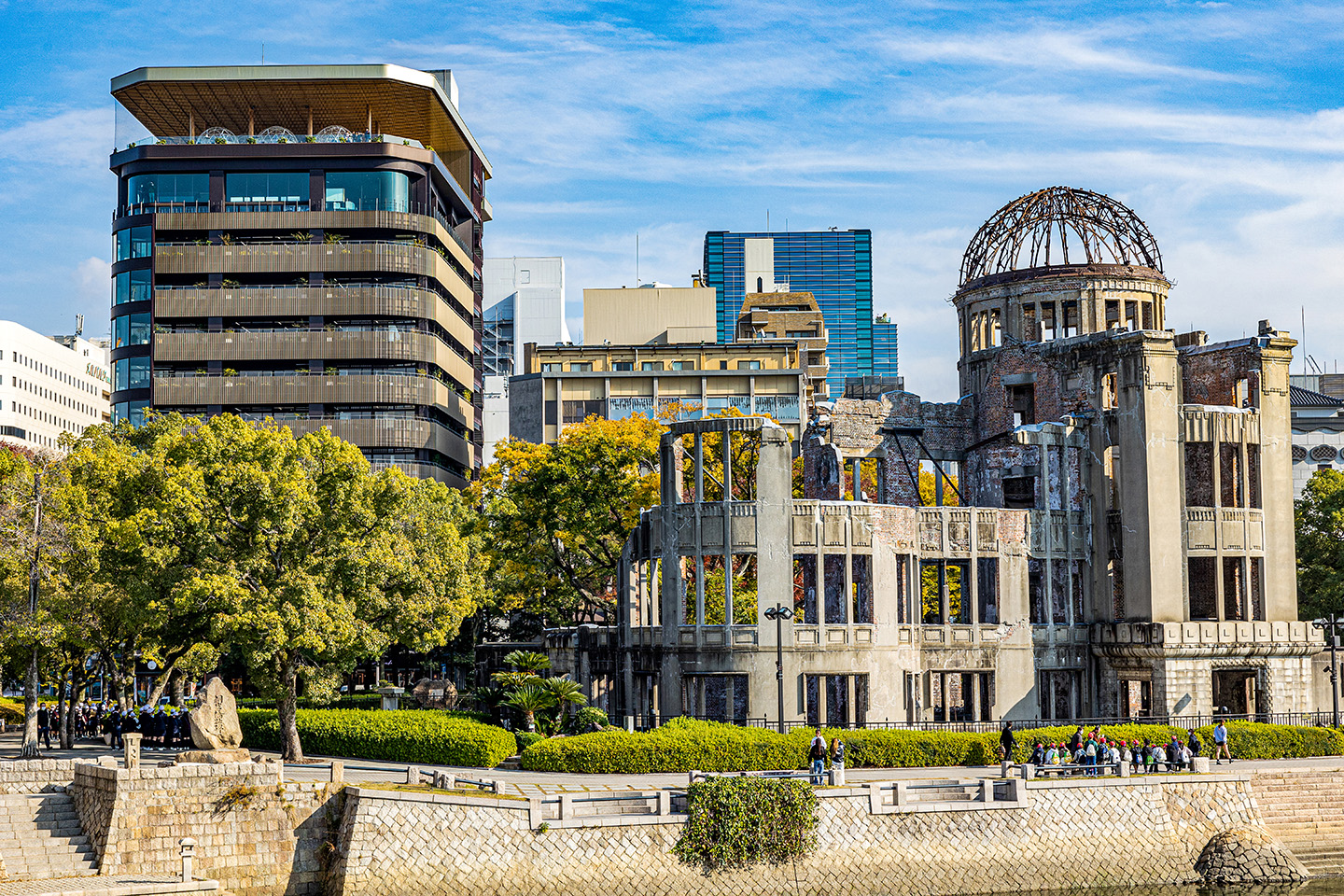
Orizuru Tower on the left, Atomic Bomb Dome on the right
From a distance, it really stood out—a modern building with cafés, souvenir shops, and an observation area.
Apparently, you can even drop paper cranes from the upper floors, letting them fall down inside the building.
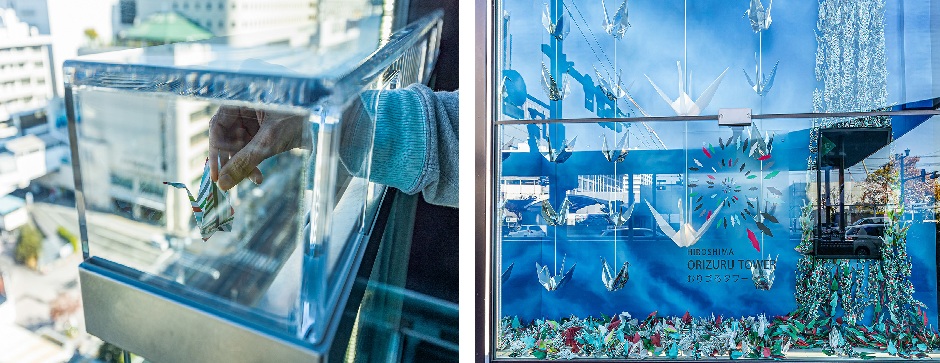
Left: Crane drop area on the upper floor / Right: Collected paper cranes below
I didn’t go up this time, but I did stop by the souvenir shop on the first floor.
Just from what I saw, it felt like a place worth visiting—so if you have time, I’d definitely recommend checking it out.
adcode
The Atomic Bomb Dome
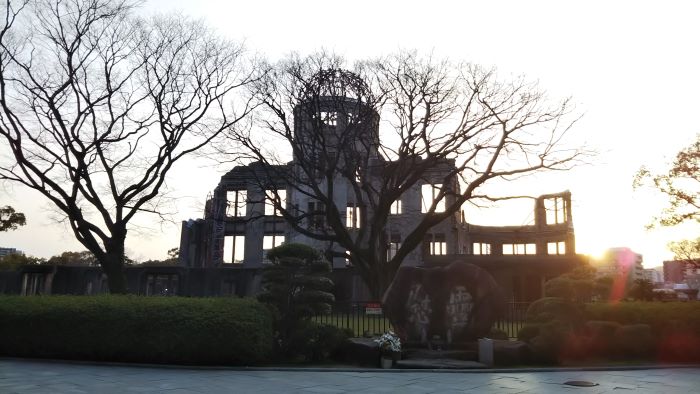
When I got closer, I noticed something that made me stop.
The rubble beneath the building has been left exactly as it was.
It hasn’t been cleaned up.
I found myself just standing there, quietly staring at it.
It felt like the power of the atomic bomb wasn’t something you needed words to understand—
it was right there, in front of me.
It’s a place I truly hope will remain preserved just as it is.
The Flame of Peace
As I walked further, I noticed a flame burning quietly in the distance, just beyond the cenotaph.
It caught my attention right away.
I found myself wondering what it was.
This is the Flame of Peace.
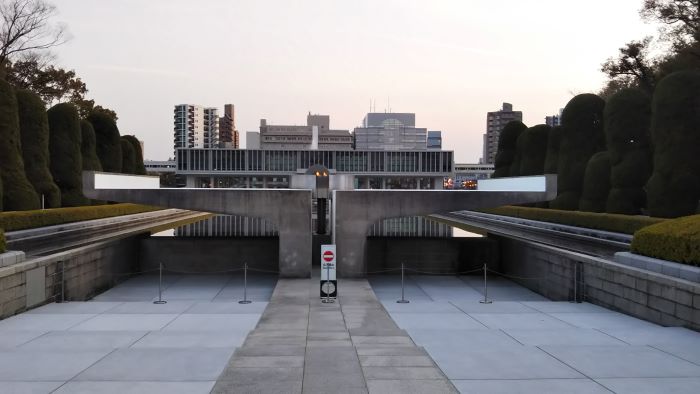
The Peace Flame is visible in the distance at the center
If you’ve been following this series, you might recognize something here.
In Part 5, I wrote about the “eternal flame” at Reikado Hall on Mt. Misen.
That flame, which has been burning for over 1,200 years, is said to be one of the original sources of this Flame of Peace.
I never expected to encounter that same fire again in a completely different place.
If you’re curious about it, I’ve written more about that flame here →
Standing Before the Cenotaph — Thinking About Obama
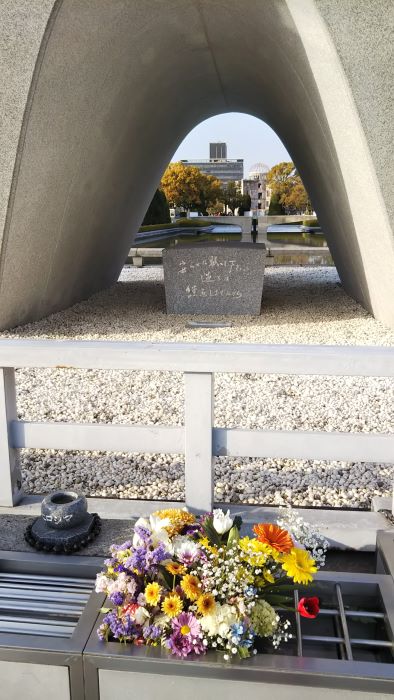
The cenotaph is a place many people recognize from television.
Especially from May 27, 2016—the first visit to Hiroshima by a sitting U.S. president.
I remember watching President Obama lay flowers here, completely absorbed in that moment.
At the time, I found myself wondering what he might have been thinking.
To be honest, back then, I looked at it with a slightly detached perspective. I didn’t think he felt anything close to an apology.
But this time, standing there myself for the first time, I quietly put my hands together in front of the cenotaph.
And then I noticed something.
Beyond the cenotaph…
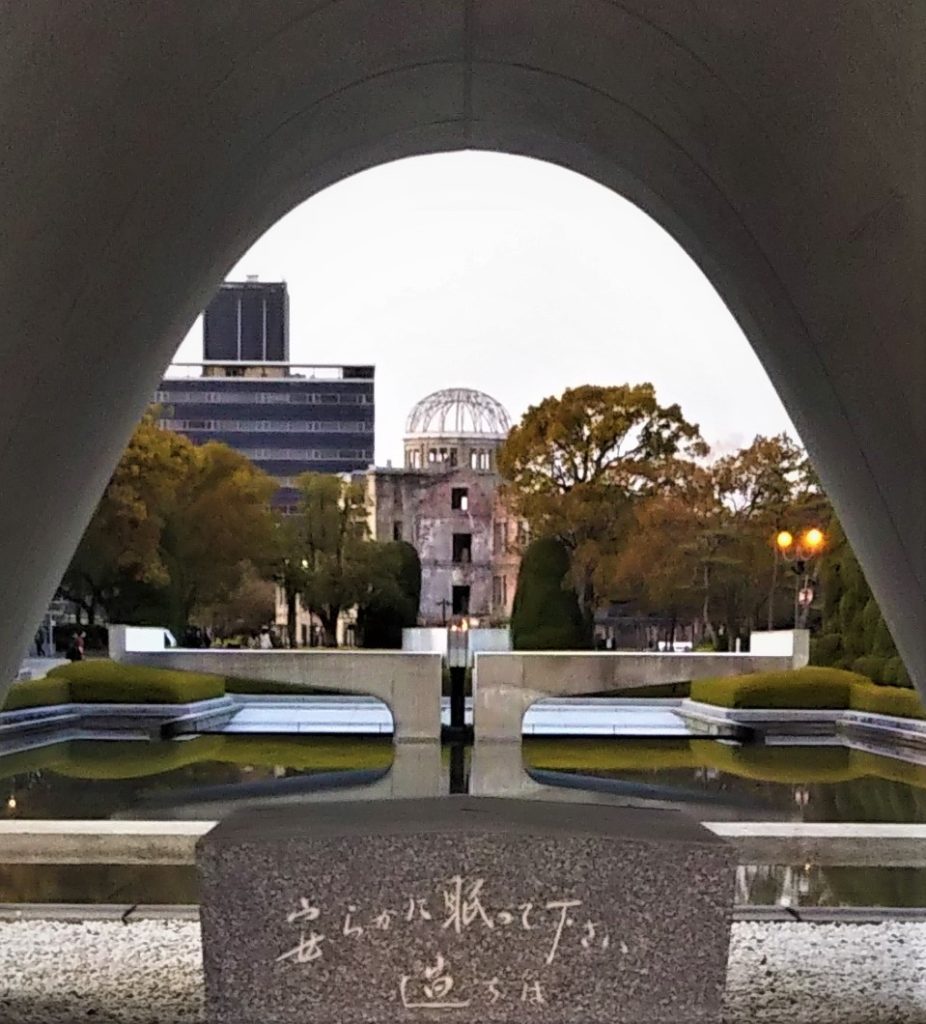
you can see the Atomic Bomb Dome—
with the Peace Flame quietly aligned along the same axis.
I hadn’t known this before, but the entire space was intentionally designed by the renowned Japanese architect Kenzo Tange, so that the dome, the cenotaph, and the Peace Memorial Museum align in a straight line.
It’s something you only truly understand when you stand there yourself.
And in that moment, I realized—
There are things you can only feel when you come here in person.
Standing there, I couldn’t help but think:
What did President Obama feel, standing in that exact spot, looking at the dome?
As the leader of a country that once dropped the atomic bomb, facing its silent, enduring symbol…
No one blamed him during that visit. In fact, he was welcomed.
And yet, even without words, I couldn’t help but feel that standing there must have stirred something deep within him—something that doesn’t show on television.
That was simply my own impression.
But being able to feel that for myself made me truly glad that I came to Hiroshima.
A Missed Visit… and a Reason to Return
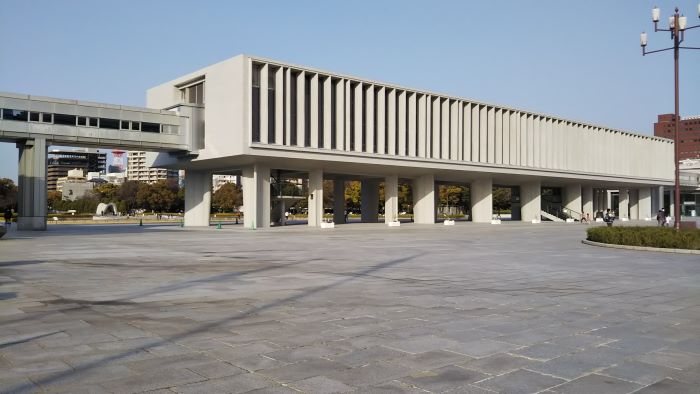
Hiroshima Peace Memorial Museum
One of the main reasons I came to Hiroshima was to visit the Hiroshima Peace Memorial Museum.
The last time I came, I missed it because it had already closed.
So this time, I was really looking forward to finally going inside.
But when I got there—
Closed.
Temporarily closed.
I couldn’t believe it.
Apparently, it was due to COVID.
Maybe it just wasn’t the right timing for me.
But instead of feeling disappointed, I chose to see it differently.
Maybe this is Hiroshima telling me to come back again.
So I decided to save it for next time.
An Unexpected Shrine and Hiroshima Castle
With some unexpected free time, I decided to walk toward Hiroshima Castle.
It took about an hour—longer than I expected.
Along the way, I came across Hiroshima Gokoku Shrine.
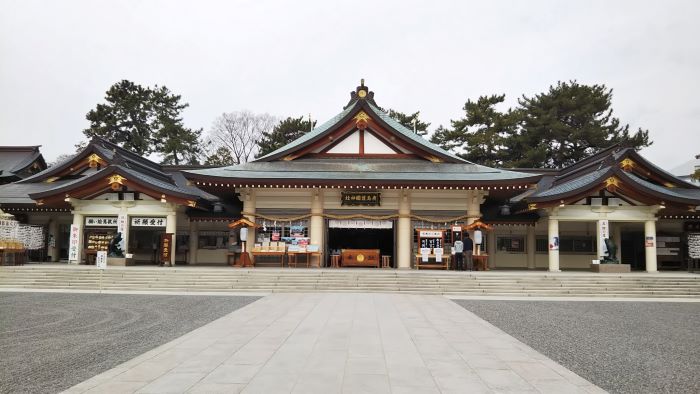
I hadn’t planned it at all, so it felt like a completely unexpected discovery.
Despite being right in the middle of the city, the atmosphere was calm and quietly peaceful.
At the shrine, I noticed a photo of the Hiroshima Carp players visiting and praying there.
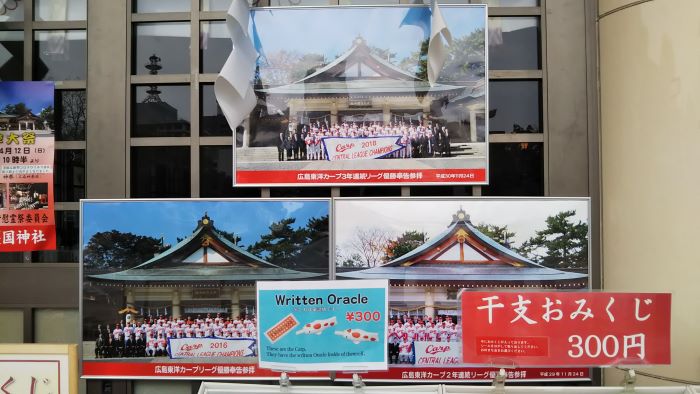
That’s when it clicked—the Hiroshima Carp, a professional baseball team based in Hiroshima, come here to pray for victory.
That explains why I kept seeing carp all over the shrine.
Even the wooden prayer plaques (ema) featured carp designs.
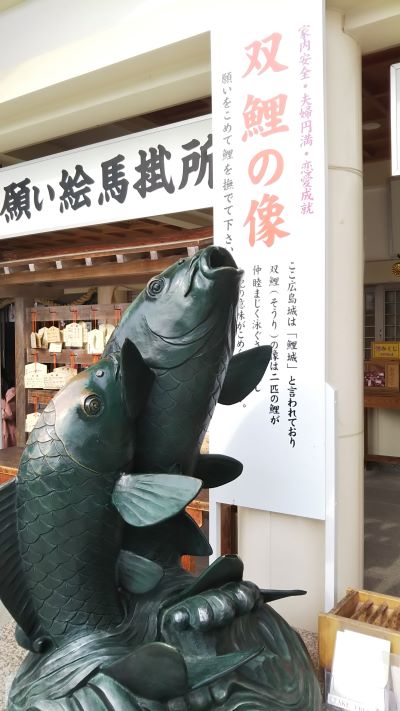
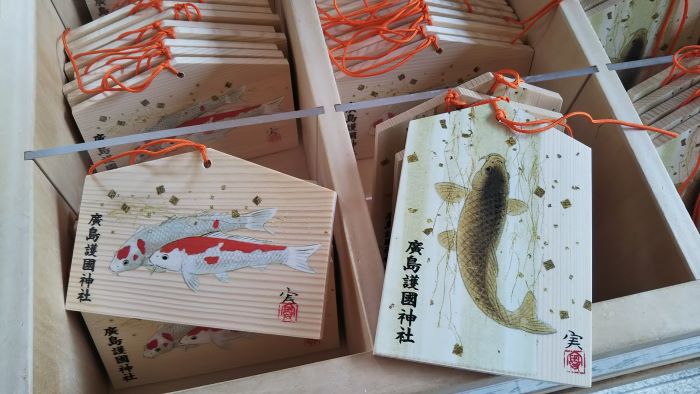
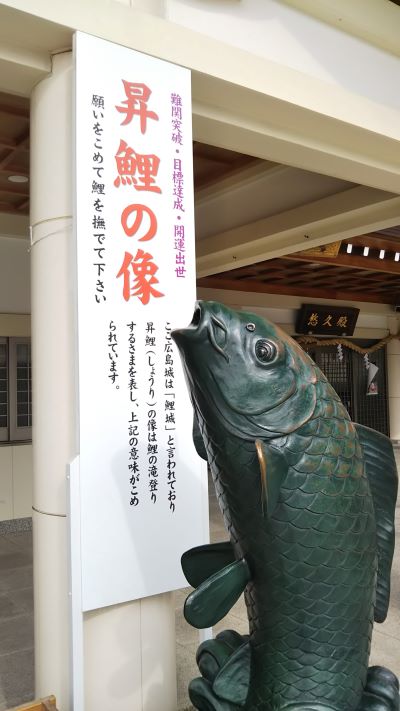
Hiroshima Castle
Just a short walk from the shrine is Hiroshima Castle.
I also learned that the castle is sometimes called “Rijō,” or “Carp Castle.”
Which made me wonder—did the team name come from the castle, or the other way around?
(Well… probably the castle came first.)
Inside the moat, there were actual carp swimming.
But unfortunately…
The castle was closed as well.
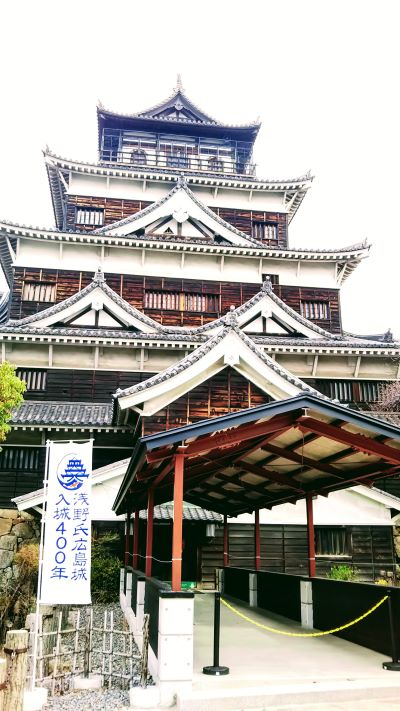
Given the situation at the time, it couldn’t really be helped.
Still, after walking all that way, it was a bit of a shock.
But I also came across a beautiful shrine along the way, so I’ll take that as a win.
Final Thoughts on Hiroshima
I wouldn’t say I did a full “tour,” but I spent the day walking as much as I could, visiting the places I had wanted to see.
The place that left the deepest impression on me was, of course, the Peace Memorial Park.
It’s clearly a place filled with important historical meaning.
But at the same time, I felt something unexpected.
It felt… surprisingly comfortable.
Along the riverside between the park and the Atomic Bomb Dome, there are small open cafés where people—locals and visitors alike—spend time freely and peacefully.
That atmosphere felt almost unreal.
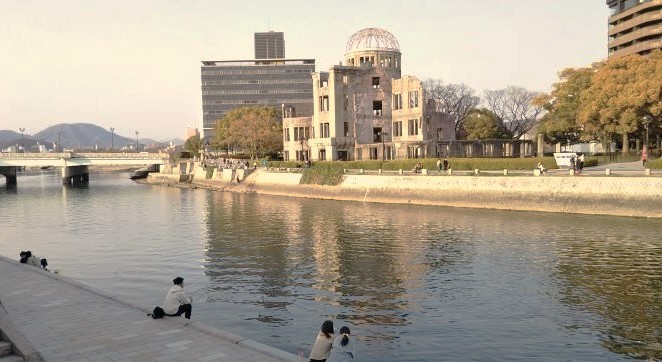
Many decades ago, something unimaginable happened here.
And yet now, it feels so calm.
Perhaps because something so tragic once happened here, this has become a place where the value of peace can be felt more deeply than anywhere else.
The everyday life we take for granted isn’t actually guaranteed.
Hiroshima is a place that reminds us of that.
When people visit this place and return to their own towns,
I hope they might see their familiar surroundings just a little differently.
With that thought in mind, I brought the final day of this journey to a close.
Wrapping Up
That’s it for this part.
This Hiroshima–Miyajima series is almost complete, with just one final (bonus) article left.
Thank you so much to everyone who has been reading along.
If this blog made even one of you think, “I’d love to visit Hiroshima or Miyajima someday,” I would be truly happy.
It really is a beautiful place.
If you ever have the chance, I hope you’ll visit Hiroshima and Miyajima for yourself.
Next time, I’ll be sharing the souvenirs I picked up during this trip.
I’ll be posting it soon, so if you’re interested, I hope you’ll come back and check it out.
And if you’d like to read this story in Japanese, you can find it here →
Thank you so much for reading, as always.
 しめいの開運日誌" width="1000" height="353" >