
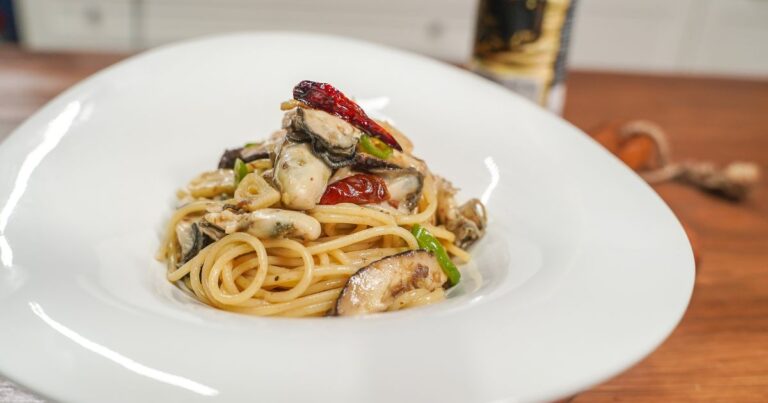
I Can Never Get Full with a Regular Portion of Pasta — Why I Always End Up Ordering “Men’s Size”
Does pasta make you gain weight?
Should you avoid it while dieting?
To be honest, the answer isn’t so simple.
Pasta can either make you gain weight or not—it really depends on how you eat it.
I used to struggle with this myself. Every time I ate pasta, I’d feel full for a while… and then, before I knew it, I was hungry again. That cycle would often lead to overeating.
If you prefer reading in Japanese, you can check the full Japanese version here(日本語版はこちら).
Do you like pasta?
I absolutely love it.
When I eat out, I often end up ordering what’s called a “men’s set” in Japan—a larger portion, sometimes with a side dish or a drink, originally meant for men… even though I’m a woman, I still go for it.
Because honestly, a regular “ladies’ portion” just doesn’t feel like enough.
I genuinely admire people who feel satisfied with that amount. I really do. But for me, it never quite hits that point.
Frozen pasta meals? Same story.
They look decent at first, but somehow, they never keep me full for long.
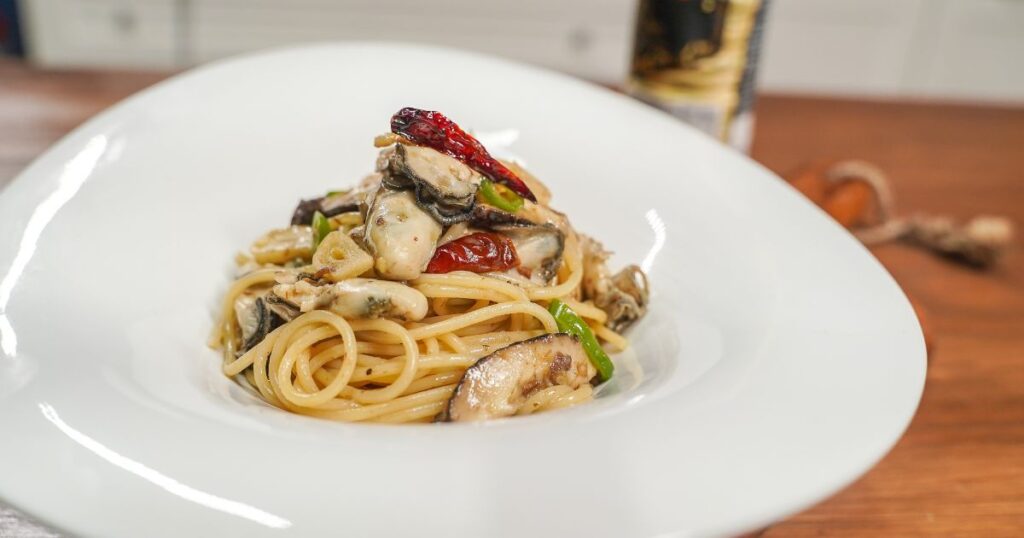
Cooking at home, though—that’s a different story.
It feels like freedom. I can make as much as I want, exactly how I want it.
So naturally, I tend to make a generous portion.
And yet…
Even after eating all that, I still don’t feel full.
It started to feel like an endless loop.
Have you ever experienced something like that?
- 1 Why Does Pasta Make Me Gain Weight? My Confusing Experience
- 2 Why Pasta Doesn’t Keep You Full for Long
- 3 Does Pasta Really Make You Gain Weight? The Truth Behind the Scale
- 4 How to Eat Pasta Without Feeling Unsatisfied
- 5 What Changed When I Adjusted My Eating Style
- 6 Easy Pasta Ideas That Actually Keep You Full
- 7 If You Want an Easier Option
- 8 So… Can You Eat Pasta While Dieting?
- 9 Pasta Wasn’t the Problem After All
Why Does Pasta Make Me Gain Weight? My Confusing Experience
That wasn’t the only thing that bothered me.
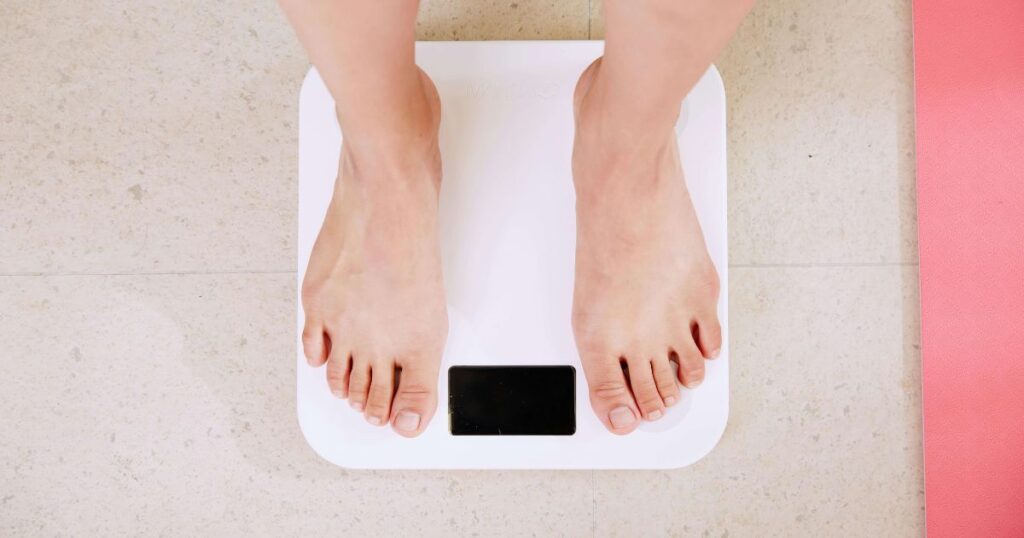
On days when I ate pasta, I’d step on the scale at night and pause.
“Oh… I did gain weight after all.”
On days when I ate rice, udon, ramen, or bread, I hardly noticed any change in my weight,
but on pasta days, it felt like I was gaining weight.
That’s when I started to wonder—
Is pasta actually more fattening than other foods?
On top of that, the feeling of fullness never seemed to last very long.
So I decided to look into it.
And once I did, I realized there was a clear reason behind it.
That moment made everything suddenly click.
Why Pasta Doesn’t Keep You Full for Long
Pasta is mostly carbohydrates.
When you eat a lot of carbs, your blood sugar tends to rise quickly after a meal.
In response, your body releases insulin to bring it back down.
This is a completely normal process.
But when your blood sugar rises quickly and then drops just as fast, your brain may see that drop as a signal that you need more energy—which can make you feel hungry.
So even if you’ve just eaten a full meal,
you may find yourself feeling hungry again sooner than expected.
Additionally, pasta meals tend to:
・ Be low in protein and fat
・ Require less chewing
Both of these factors make it harder for your body to feel satisfied for long.
Looking back, it all made sense.
No matter how much I ate, I still found myself thinking:
“This isn’t enough…”
“I’m already hungry again…”
It wasn’t just me—pasta naturally has several characteristics that make it easier to feel hungry again.
Does Pasta Really Make You Gain Weight? The Truth Behind the Scale
There’s another frustrating thing that often happens on pasta days—
The number on the scale goes up.
But here’s something important to keep in mind:
That increase doesn’t necessarily mean you’ve gained fat.
One major reason is water retention.
When you eat carbohydrates, your body stores them as glycogen. And glycogen is stored along with water.
For every 1 gram of carbohydrates, your body retains about 3 grams of water.
So when you eat a high-carb meal like pasta, your body temporarily holds onto more water—and your weight goes up.
This is simply a normal physiological response.
On top of that, restaurant pasta is often higher in salt, which can lead to bloating.
So what you’re seeing is usually just temporary weight gain.
In many cases, your weight returns to normal within a day or two.
In other words:
A higher number on the scale after eating pasta doesn’t automatically mean you’ve gained fat.
Realizing that alone was surprisingly reassuring.
Also, while udon and pasta are both made from wheat, they’re not drastically different in terms of how fattening they are.
However, pasta can easily become higher in calories depending on the sauce and the amount of oil used.
How to Eat Pasta Without Feeling Unsatisfied
So how can you enjoy pasta and still feel satisfied?
Here are a few simple things I tried that made a noticeable difference.
They’re all easy enough to stick with—even on days when you don’t feel like putting in much effort.
1. Reduce the Pasta Slightly and Add More Ingredients
This was the most effective change for me.
Just reduce the amount of pasta a little and add more ingredients like:
・ Mushrooms
・ Vegetables
・ Tuna
・ Bacon
It adds volume to the dish, and because you’re chewing more, it changes how satisfied you feel after eating.
2. Add a Bit of Protein Before Eating Pasta
Before eating pasta, try having a small amount of protein, such as:
・ Boiled eggs
・ Natto
・ Cheese
・ Yogurt
This helps slow down the spike in blood sugar and makes the feeling of fullness last longer.
3. Add Ingredients That Require Chewing
Pasta on its own is easy to eat quickly.
By adding ingredients like broccoli or mushrooms, you naturally chew more, which helps activate your body’s satiety signals.
4. Don’t Start with a Large Portion
Instead of starting with a large portion, try this:
Eat a regular portion first, then pause and ask yourself—
“Do I actually want more?”
More often than not, I realized it was easier to just stop there—
rather than going through the trouble of getting another serving.
5. Choose Lighter Sauces
Cream-based sauces are undeniably delicious.
But they can also feel heavy afterward.
Switching to tomato-based or Japanese-style sauces often made me feel lighter after eating.
In the end, I realized something simple but important:
It wasn’t that pasta itself was the problem.
It was the way I was eating it.
What Changed When I Adjusted My Eating Style
To be honest, I wasn’t fully convinced at first.
I thought, “I’ll probably get hungry again anyway.”
But the results were better than I expected.
The biggest change?
I finally started to feel satisfied after eating.
Before, even a large portion wouldn’t keep me full for long.
But after making a few small changes—
・ Adding more ingredients
・ Eating a bit of protein beforehand
・ Including foods that require chewing
That feeling of “I’ve eaten enough” started to last much longer.
I also began to eat less overall.
Not because I was forcing myself, but because I reached that point of satisfaction sooner.
Before, I needed large portions and still wanted something sweet right after.
So this felt like a significant shift.
It made me realize something important:
Pasta isn’t a “fattening food.”
It’s simply a food that requires a bit of balance.
Easy Pasta Ideas That Actually Keep You Full
Even when you’re dieting, there are days when you just want pasta.
On those days, instead of feeling guilty, it’s much easier to focus on making it more satisfying.
Here are a few simple ideas that are easy to make—even on low-energy days.
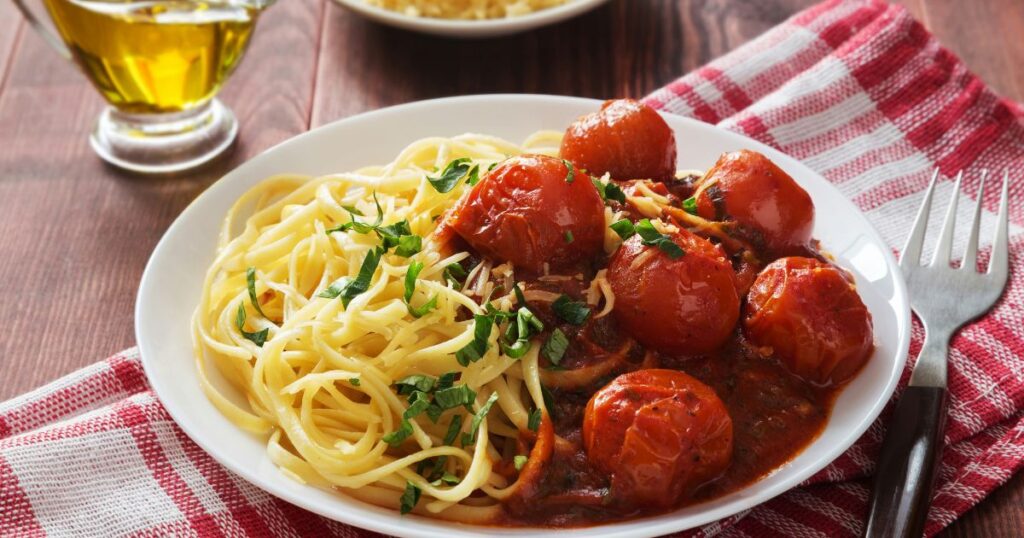
Chicken & Broccoli Soy Sauce Pasta
A simple, balanced dish with protein and fiber to help you stay full longer.
・ Cook pasta as usual.
・ Cut chicken into bite-sized pieces.
・ Cook the chicken and broccoli (you can cook them together with the pasta if you like).
・ Drain everything well.
・ Toss with a bit of olive oil.
・ Season with salt, pepper, and a splash of soy sauce.
Light Egg & Spinach Pasta
A light but satisfying option with added protein.
・ Cook pasta as usual.
・ In a pan, heat a little olive oil and sauté garlic.
・ Add spinach and cook briefly.
・ Add the cooked pasta to the pan.
・ Lower the heat and stir in a beaten egg, tossing quickly to coat.
・ Season with salt, pepper, and a splash of soy sauce or some grated cheese.
If You Want an Easier Option
You might be thinking:
“I understand the idea… but doing this every time feels like a lot.”
Honestly, I feel that way sometimes too.
In those cases, choosing a simpler system from the start can help.
For example:
・ Switching your staple (like trying bean-based pasta)
・ Using meal replacements occasionally
These approaches can make things much easier to manage.
The goal isn’t to push yourself harder.
It’s to make things easier to continue.
So… Can You Eat Pasta While Dieting?
Yes—you absolutely can.
What matters isn’t just the amount, but how you eat it.
・ Add protein
・ Avoid rapid blood sugar spikes
・ Choose ingredients that keep you full
With just a few adjustments, pasta can go from something you worry about to something you genuinely enjoy.
There’s no need to cut it out entirely.
Pasta Wasn’t the Problem After All
Looking back, the biggest realization I had was this:
Pasta itself wasn’t the problem.
It’s simply a food that can make you feel hungry more easily—if you don’t balance it well.
Once I understood that, everything changed.
I used to believe:
“If I eat pasta, I gain weight.”
But in reality, it wasn’t the pasta—it was how I was eating it.
And honestly…
A diet that constantly forces you to give up the foods you love isn’t something you can sustain.
So instead of cutting it out completely, learn how to enjoy it in a way that works for you.
That shift made all the difference for me.
If you love pasta, you don’t have to give it up.
Just make a few small adjustments—and keep enjoying it.
If you prefer reading in Japanese, you can check the full Japanese version here(日本語版はこちら).


 しめいの開運日誌" width="1000" height="353" >