

Have you ever noticed peeling skin or itching on your feet and thought,
“Wait… could this be athlete’s foot?”
Even if you try over-the-counter treatments, it doesn’t always go away completely.
And let’s be honest—it’s not exactly the easiest thing to talk about.
I couldn’t even talk about it with anyone.
If you prefer reading in Japanese, you can check the full Japanese version here(日本語版はこちら).
For a long time, I struggled with foot issues that felt exactly like athlete’s foot.
In this article, I’ll share my personal experience—what I tried, what actually helped, and how my symptoms gradually improved.
If you’re dealing with something similar, I hope this gives you a useful perspective.
To put it simply:
After continuing a care routine using baking soda and citric acid, my itching and peeling became much more manageable after a long time.
This is a personal experience, and results may vary. If your symptoms persist or worsen, please consider consulting a medical professional.
- 1 My Long Struggle with Athlete’s Foot–Like Symptoms
- 2 When I Tried Iodine-Based Care
- 3 I Started Thinking About Environment and Body Condition
- 4 How I Discovered Baking Soda and Citric Acid Care
- 5 How Long It Took to See Results
- 6 What Happened After One Month
- 7 Why Did It Help? My Personal Thoughts
- 8 How I Actually Did It
- 9 Things to Be Careful About
- 10 Other Unexpected Benefits
- 11 If You’re Struggling with Similar Symptoms
- 12 Final Thoughts
My Long Struggle with Athlete’s Foot–Like Symptoms
For quite a long time, I had ongoing issues with my feet.
・ Peeling skin
・ Itching
・ Small blisters
・ Dampness
・ And even an unpleasant smell
In other words, they were all classic symptoms of athlete’s foot.
It was honestly the worst.
I couldn’t wear sandals.
I avoided hot springs.
And I was constantly worried about it.

I tried over-the-counter treatments and took care of my feet, but nothing really solved the problem.
It kept coming back.
That cycle was exhausting.
When I Tried Iodine-Based Care
At one point, I tried an iodine-based antiseptic (similar to povidone-iodine).
And to be fair, it did work—at least for a while.
My symptoms improved noticeably.
But after some time… everything came back.
That’s when I started to question things.
Maybe this isn’t just about killing bacteria or fungus.
I also remember how harsh that treatment felt—my skin turned red, and it even stained my socks.
Looking back, it felt more like a temporary fix than a real solution.
I Started Thinking About Environment and Body Condition
Feet live in a surprisingly harsh environment.
・ They sweat easily
・ They stay warm and moist
・ They’re often trapped inside shoes
On top of that, I personally felt like:
・ I get cold easily
・ My circulation isn’t great
・ My skin tends to be sensitive
So I started to wonder—
Maybe I needed to change my skin condition itself, not just treat the surface symptoms.
How I Discovered Baking Soda and Citric Acid Care
Interestingly, I didn’t start this for my feet at all.
I had originally been using baking soda and citric acid as a fizzy skincare treatment for other beauty purposes.
One day, without really thinking, I tried it on my feet as well.
And that’s when I noticed something.
Things started to change.
・ Less peeling
・ Less itching
・ Less odor
At first, the changes were subtle.
But they were real.
I remember pausing and thinking,
“Wait… is this actually working?”
It wasn’t something I expected at all.
How Long It Took to See Results
To be honest, I didn’t see any dramatic changes right away.
For the first few days, it felt almost the same as before.
But to be fair, I wasn’t really expecting it to help with my feet at all.
I originally started using baking soda and citric acid as a kind of skincare treatment—like a mask or a gentle massage—and I simply happened to try it on my feet as well.
So I never went into it thinking, “This has to work.”
I simply kept doing it because the carbonated feeling was refreshing and felt good.
After about a week, I started to notice small differences.
The itching felt slightly less intense, and the peeling didn’t seem as severe.
After about a month, the changes became much more noticeable.
It wasn’t completely gone, but it was clearly more manageable than before.
Looking back, I think what mattered most was simply being able to enjoy the process and keep going.
Instead of expecting quick results, I continued it a few times a week—and over time, I started to see real changes.
If you enjoy that refreshing, fizzy feeling of carbonation, I don’t think it’s that hard to keep up.
What Happened After One Month
I didn’t do it every single day.
Just a few times a week, consistently.
And slowly, I started to notice a difference.
It wasn’t perfect, but it was clearly better than before.
More importantly, I stopped worrying about my feet all the time.
That alone felt like a huge relief.
Why Did It Help? My Personal Thoughts
This isn’t a medically proven method, but based on my experience, I have a few thoughts.
Circulation support from carbonation
Carbonation is often said to support blood circulation.
Better circulation may have helped improve the condition of my skin.
Cleansing effect of baking soda
Baking soda has mild cleansing properties.
It may have helped remove buildup like dead skin and excess oils.
Slightly acidic environment from citric acid
Healthy skin tends to be slightly acidic.
Citric acid may have helped restore that natural balance.
In the end, I think it wasn’t just one thing—it was a combination of factors.
It wasn’t just about targeting fungus, but about improving the overall condition of my skin.
At that point, I didn’t really care why it worked anymore.
I was simply relieved that it did.
How I Actually Did It
The method itself is very simple.
Mix equal parts baking soda and citric acid, add a small amount of warm water, and turn it into a paste.
Then apply it to your feet, leave it on for a few minutes, and rinse it off gently.
No special tools needed.
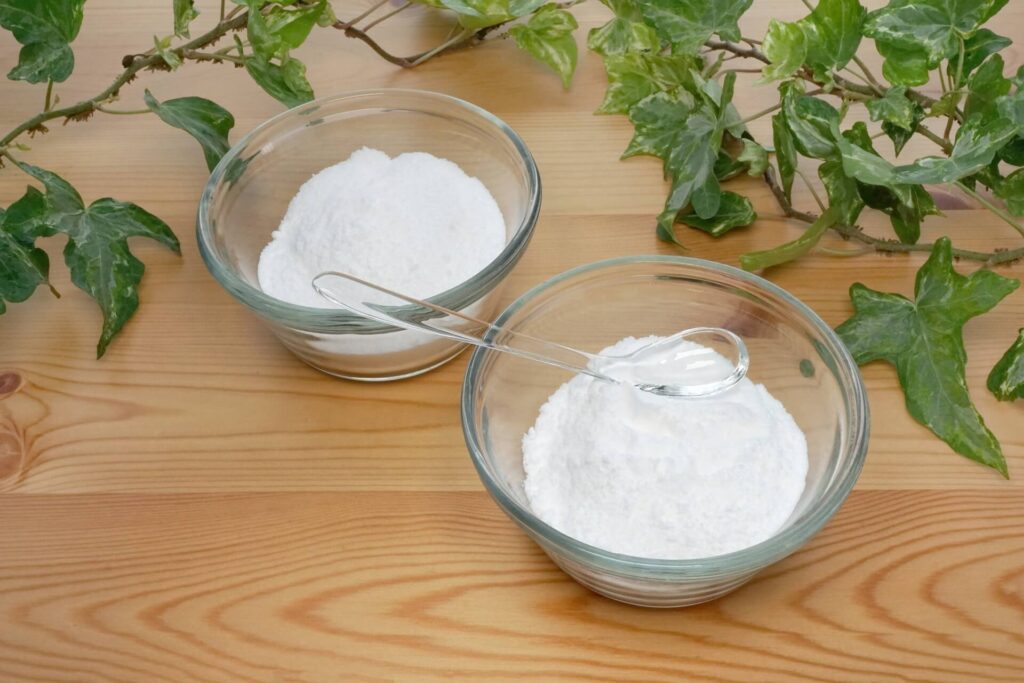
What you need
・ Baking soda
・ Citric acid
・ Warm water (a small bowl)
Steps
1.Add equal amounts of baking soda and citric acid (I used about 2 tablespoons each)
2.Slowly add water, little by little
3.Once it becomes a thick paste, apply it to your feet
The mixture will fizz as it reacts.
Leave it on for about 5 minutes, then rinse gently.
No scrubbing is needed—just rinse it off.
Tips
Add water little by little.
If you add too much at once, it will become too watery.
Things to Be Careful About
・ Stop if you feel any irritation.
・ Avoid using it on broken or irritated skin.
・ Try not to scrub too hard.
・ Make sure to dry your feet thoroughly after bathing.
If you have sensitive skin, it may be better to start with a small amount.
Other Unexpected Benefits
Although I started this for foot issues, I found it useful in other ways too:
・ Heel care
・ Odor control
・ Refreshing foot care
・ Even as a body scrub
It turned out to be more versatile than I had expected.
If You’re Struggling with Similar Symptoms
Foot problems like this can be surprisingly stressful.
And honestly, they’re not easy to talk about.
If you’ve tried different treatments without much success,
it might be worth looking at your overall body condition and environment as well.
That change in perspective made a big difference for me personally.
Final Thoughts
Through this care routine, my long-standing foot issues became much more manageable.
To summarize:
・ My athlete’s foot–like symptoms improved significantly
・ Baking soda and citric acid care played a key role
・ Consistency made a difference
・ Body condition and environment also seemed important
This is my personal experience, but I hope it can offer some insight if you’re going through something similar.
The ingredients I used were simple—food-grade baking soda and citric acid. Nothing special.
What matters most is finding a method you can comfortably continue.
I genuinely hope your feet get better soon.
If you prefer reading in Japanese, you can check the full Japanese version here(日本語版はこちら).




 しめいの開運日誌" width="1000" height="353" >