
👉 Read the Japanese version here.
This is the seventh post from my solo trip to Miyajima and Mt. Misen.
If you’re new to this series, feel free to check out Part 1, where I share some recommended spots in Hiroshima.
Up until now, I’ve been sharing my hiking and shrine visits—but this time, it’s finally all about food.
After an early morning hike up Mt. Misen, I was completely starving—and Miyajima turned out to be a perfect place to eat my way through.
So I naturally found myself wandering along the approach to Itsukushima Shrine, stopping at shops and picking up whatever caught my eye.
One of the best parts of traveling solo as a woman?
You can eat whatever you want, whenever you want—no need to worry about anyone else.
So this time, I’d love to share a free-spirited food adventure around Miyajima.
You can also check the previous part here:
- 1 Fresh Oysters & Fried Oysters — Try Both
- 2 The Cheese Tempura Fish Cake… Stolen by a Deer?!
- 3 Worth the Wait: Gelato at BACCANO
- 4 Fried Momiji Manju — A Crispy Twist
- 5 Hiroshima Okonomiyaki — Surprisingly Next Level
- 6 The Dangerous Charm of “Setouchi Lemon” Snacks
- 7 The True Winner: Anago (Conger Eel) Rice
- 8 The Final Meal of My Solo Trip
Fresh Oysters & Fried Oysters — Try Both
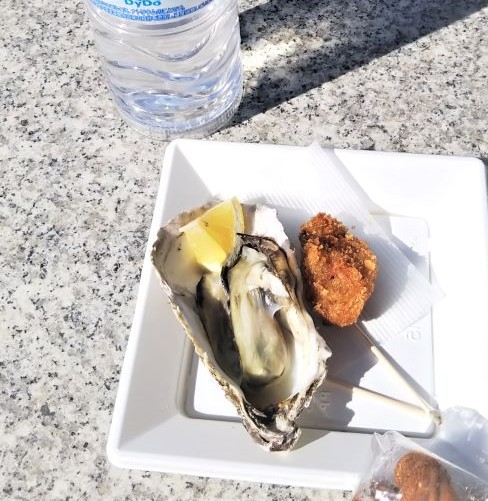
Hiroshima is famous for oyster farming, and oysters are one of the region’s signature foods.
Raw oysters are popular, of course, but fried oysters are just as beloved in Japan.
Along the street leading to Itsukushima Shrine, you’ll find countless shops lining the way.
It feels like a lively shopping street filled with souvenirs and food stalls—honestly, I could’ve stayed there all day, going back and forth.
Most of what I ate came from this street.
I tried a set of fresh oysters and fried oysters.
The fresh oysters were exactly as delicious as I imagined—but the fried oysters were the real surprise.
Crispy, rich, and incredibly satisfying.
If you go, don’t just stick to raw oysters—definitely try the fried ones too.
The Cheese Tempura Fish Cake… Stolen by a Deer?!
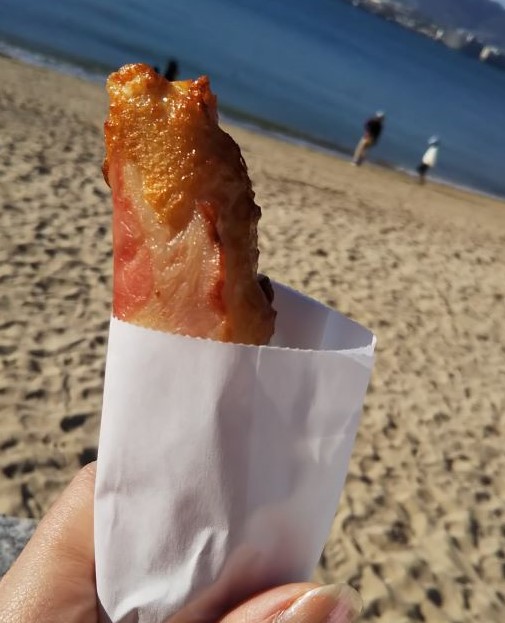
Nigiri-ten is a type of deep-fried fish cake made from seasoned fish paste.
It often comes with added ingredients like corn, cheese, red ginger, or beans.
Even though it’s called “street food,” I didn’t actually walk around while eating.
Once you step off the main path, there’s a long stretch of coastline.
People sit on the beach or along the seawall, enjoying their food while gazing at the ocean.
I love places with this kind of relaxed, free atmosphere.
So I followed suit and sat by the sea to eat.
It felt like pure luxury.
I had nigiri-ten with cheese.
It was my first time trying it. There were lots of flavors, but I chose cheese…
or at least, I thought I did—looking back at the photo, it seems like there was bacon in there too.
Anyway, it was delicious.
Crispy outside, soft inside, and surprisingly filling.
And then—out of nowhere—it happened.
And then, a deer showed up—basically a cute little “devil.”
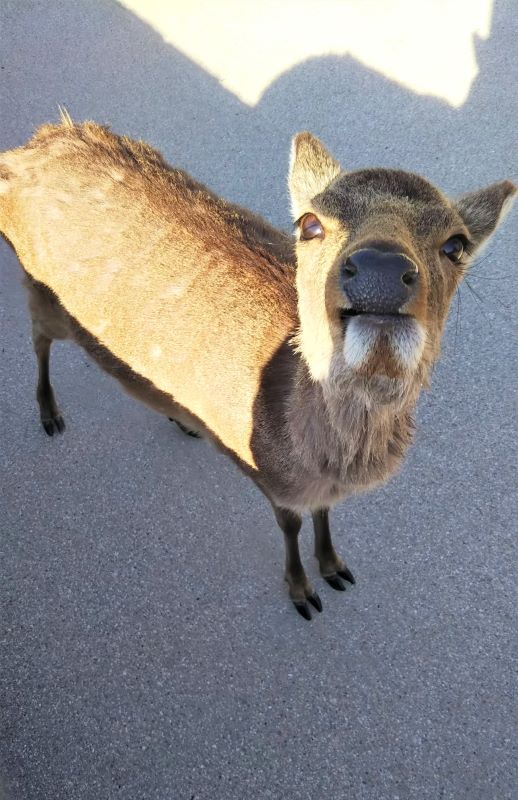
The moment I noticed it, it snatched my half-eaten snack and ran off.
I couldn’t even react.
Well… it was adorable, so I forgave it.
But here’s something important.
Unlike in Nara, feeding deer is not allowed in Miyajima.
They are considered wild animals, and because they’re often hungry, they may try to steal food from people.
So if you’re eating outside—be careful. Seriously.
Worth the Wait: Gelato at BACCANO
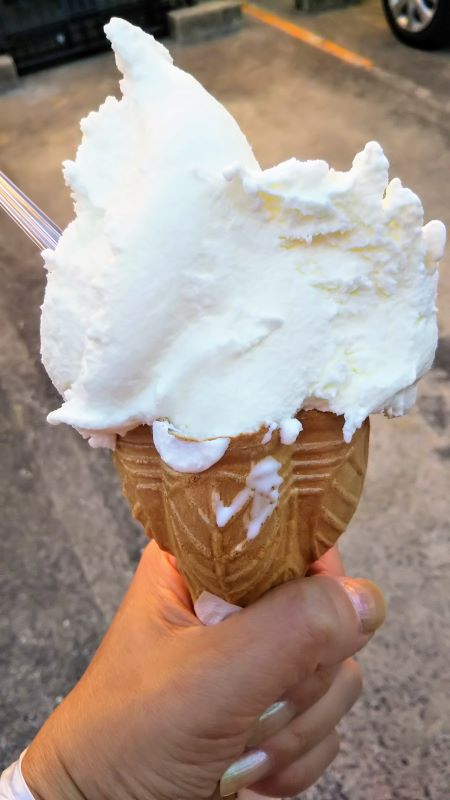
The Setouchi region, including Hiroshima, is known for its mild climate and lemon production.
That’s why you’ll find lots of lemon-flavored products here—and lemon gelato is especially popular.
Before this trip, I had been craving gelato for the longest time.
But there were no gelato shops near where I live.
So I had already decided: I had to get gelato in Miyajima.
When I got there, there was a line of about 10 people—clearly a popular spot.
I ordered a double scoop.
In hindsight, I made a questionable choice for photos—I picked two white flavors.
I think it was milk and Setouchi lemon.
Originally, I wanted something colorful like raspberry…
but the person in front of me ordered the exact same thing I had planned.
And for some reason, I felt weird copying them—so I changed my order at the last second.
Result? Two white scoops.
But honestly, I guess it doesn’t really matter.
I got the flavors I wanted, and that’s what counts.
Still… that strange embarrassment—was that just me?
Fried Momiji Manju — A Crispy Twist
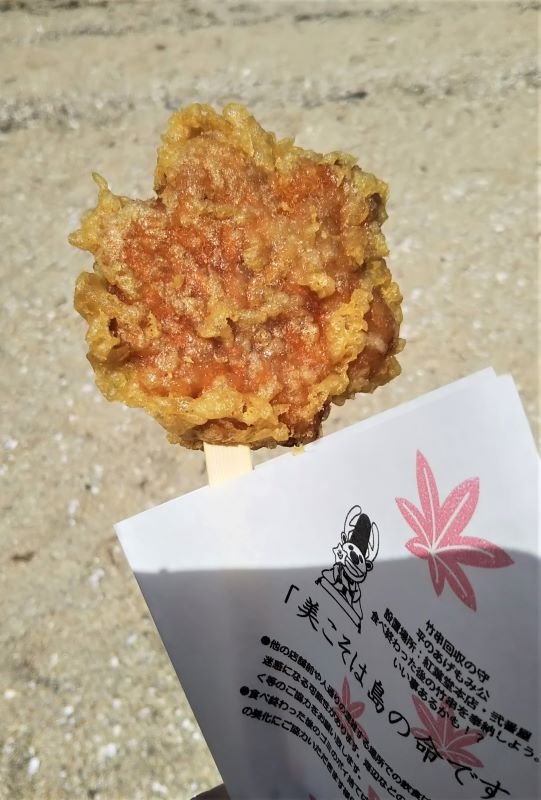
Momiji manju is a traditional Hiroshima sweet shaped like a maple leaf, usually filled with red bean paste.
Nowadays, you’ll also find variations with chocolate or cream—and even deep-fried versions.
Another thing I really wanted to try: fried momiji manju.
I don’t remember seeing this when I visited Miyajima years ago—local food really evolves.
It tasted like a freshly fried donut—crispy on the outside, soft and sweet inside.
It was delicious… but gone in seconds.
I wish they made bigger ones.
And just as I finished, I turned around—
There they were again. The deer.
They must’ve smelled it.
I forced myself to walk away… this time without losing my food.
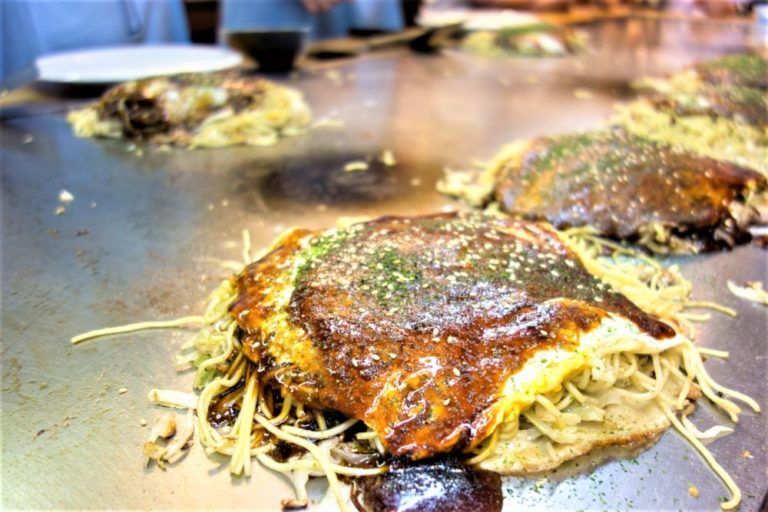
Hiroshima Okonomiyaki — Surprisingly Next Level
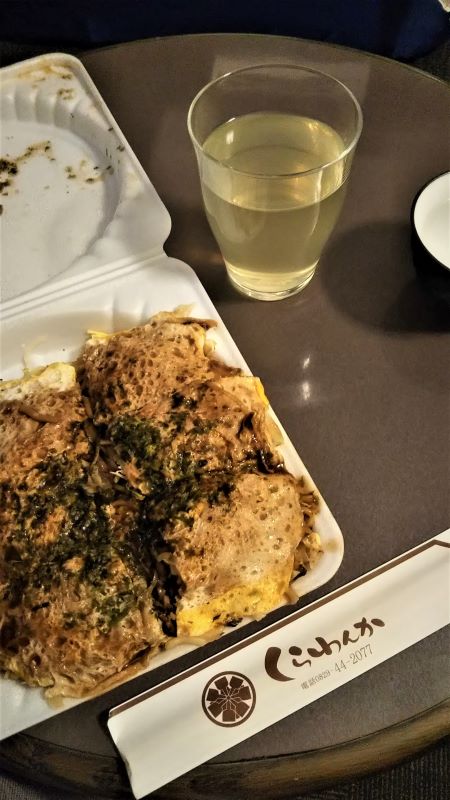
In Japan, there are two main styles of okonomiyaki: Osaka-style and Hiroshima-style.
Hiroshima-style uses layers of cabbage and usually includes noodles, giving it a very different texture and flavor.
For dinner, I decided to get something to take back to my hotel.
I randomly walked into an okonomiyaki restaurant.
They had oyster and scallop versions, which I really wanted—
but takeout was only available for the standard one.
So I ordered that, freshly made, to go.
Turns out, it was from a well-known place.
And wow—it was incredible.
To be honest, I didn’t expect much.
But the moment I took a bite—
This isn’t just “ordinary” okonomiyaki.
I couldn’t even explain what made it different,
but it tasted nothing like the ones I’d had before.
Now I get why Hiroshima is famous for it.
The Dangerous Charm of “Setouchi Lemon” Snacks
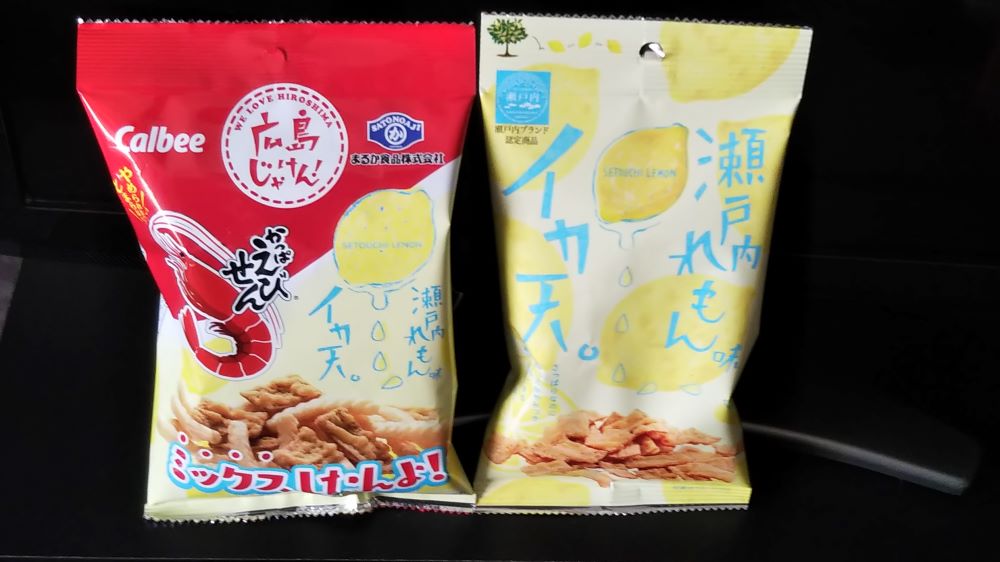
Hiroshima produces a wide variety of products using locally grown lemons.
Snacks in particular are popular souvenirs because they’re easy to carry and keep well.
This isn’t exactly street food, but I found these at a convenience store.
Shrimp crackers and fried squid snacks with “Setouchi lemon” flavor.
I don’t know why, but that phrase just sounds so good.
Anything labeled “Setouchi lemon” just sounds delicious.
I’m especially weak to lemon-flavored snacks…
so of course, I bought them.
The True Winner: Anago (Conger Eel) Rice
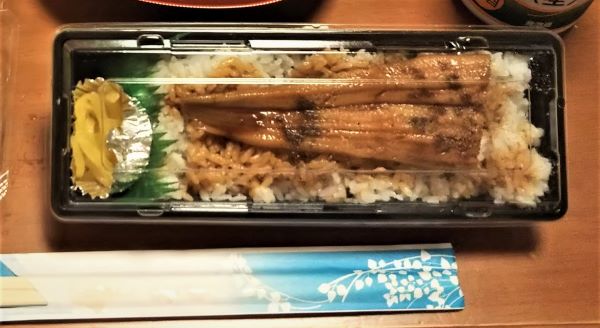
Anago rice is another well-known specialty in Hiroshima.
It’s made with grilled conger eel brushed with a sweet sauce, served over rice.
It’s similar to eel (unagi), but has a lighter, more delicate flavor.
If I had to pick one standout from this trip, it would be this.
Anago rice.
It’s usually considered a bit of a premium local dish.
I finally found a smaller, perfect-sized portion.
Perfect size, especially since I wanted to try lots of other foods.
And the taste?
Absolutely amazing.
The sweet sauce soaked into the rice—it was just perfect.
Out of everything I ate on this trip, this was hands-down my top recommendation.
No doubt about it.
The Final Meal of My Solo Trip
Just to be clear—I didn’t eat all of this in one day.
There were still so many things I didn’t get to try.
If you go, make sure you’re really hungry.
If you’re traveling with others, sharing is probably the best way to enjoy more variety.
But solo travel has its own charm.
You can wander freely, choosing whatever you feel like, without hesitation.
On my final night, I had my last meal in my hotel room.
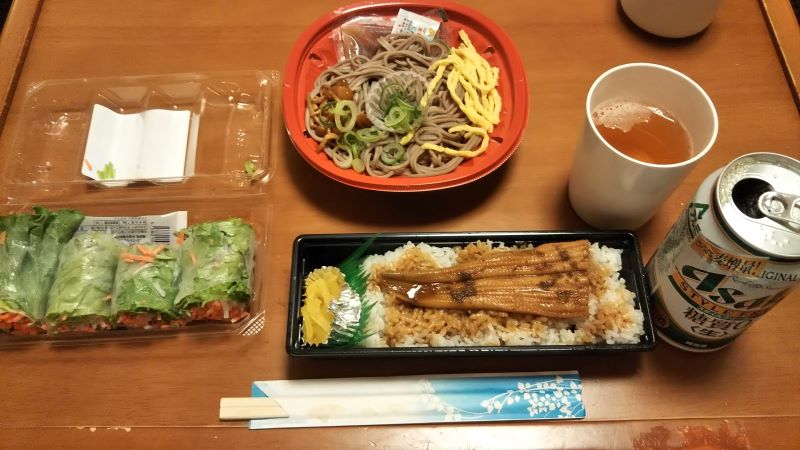
Anago rice, plus some deli food from the supermarket—spring rolls, soba, and even a can of beer.
A simple but satisfying ending.
And just like that, my little food adventure in Miyajima was over.
Thanks so much for reading.
👉 You can also read the Japanese version here.
Next time, I’ll be heading into Hiroshima city.
 しめいの開運日誌" width="1000" height="353" >