
- 1 Hiking Mt. Misen: Scenic Ropeway Ride & Reflections from the Viewpoint
- 2 Scenic Views from the Miyajima Ropeway
- 3 A Panoramic View from Above the Seto Inland Sea
- 4 Arriving at Shishiiwa Station & A View Worth Climbing For
- 5 What Are the “Three Most Scenic Views of Japan”?
- 6 A View That Feels Like a Movie
- 7 Rethinking “Tokyo Story”
- 8 Summary: Why the Ropeway Experience Is Worth It
Hiking Mt. Misen: Scenic Ropeway Ride & Reflections from the Viewpoint
If you prefer reading in Japanese, you can check it here:
This is Part 4 of my solo trip to Hiroshima and Miyajima.
If you’re new to this series, feel free to check out Part 1, where I share some recommended spots in Hiroshima.
Planning to visit Mt. Misen in Miyajima?
In this guide, I’ll share my experience of taking the Miyajima ropeway, along with tips on what the views are like and what to expect before starting the hike.
This article is based on my trip in 2020. Please check official sources for the latest information.
You can also check the previous part here:
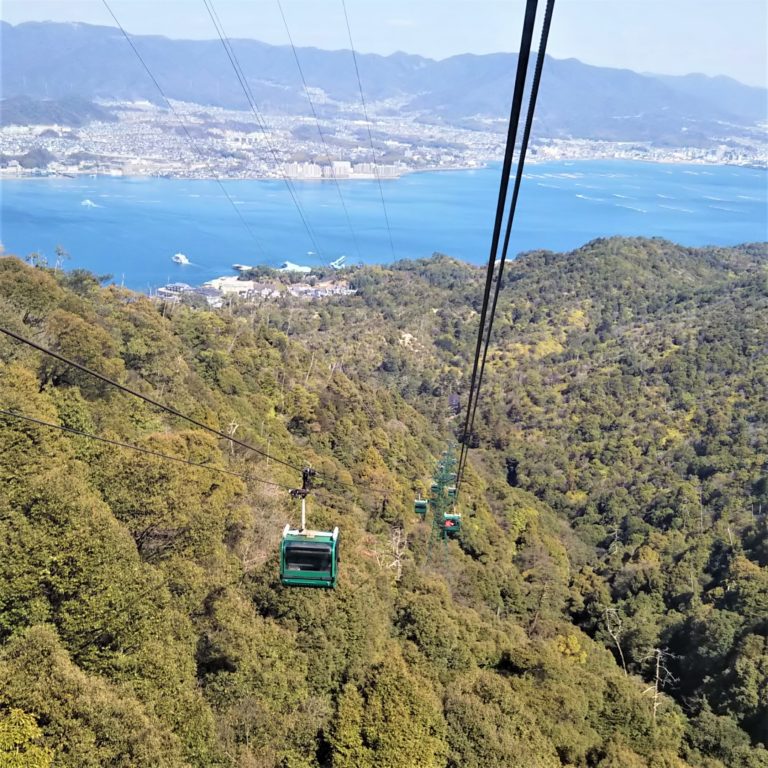
Scenic Views from the Miyajima Ropeway
The ropeway starts from Momijidani Station.
There are actually two types of ropeway systems:
・ A circulating gondola from Momijidani Station to Kayatani Station
・ A reversible ropeway from Kayatani Station to Shishiiwa Station
It’s said that combining these two systems is quite rare in Japan.
When I visited, it wasn’t too crowded yet, and I was lucky enough to ride the first gondola (the circulating one) alone.
Looking back during the ride, I could see the Seto Inland Sea stretching out beautifully behind me.
The ride takes about 10 minutes, and it’s incredibly relaxing—especially on a clear day.
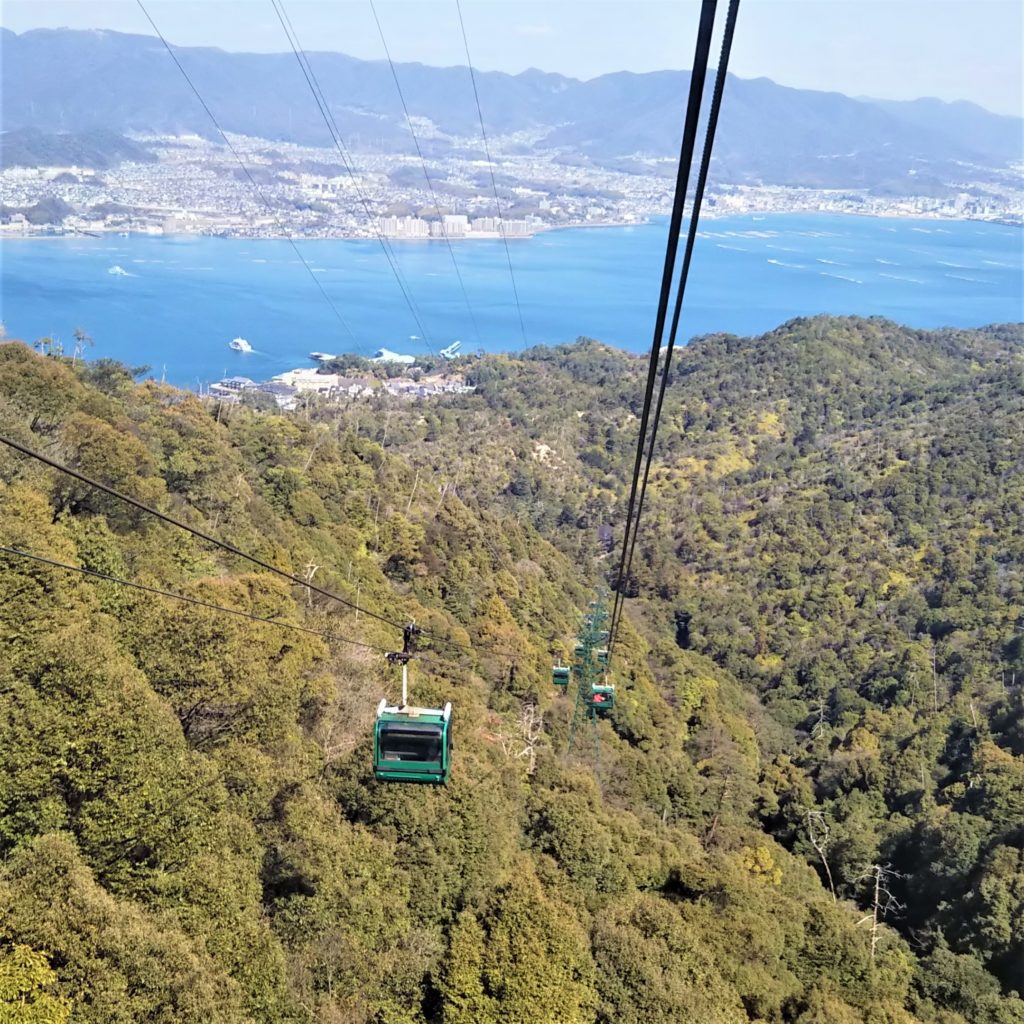
Looking back, the view was so breathtaking it felt like I could be pulled in.
A Panoramic View from Above the Seto Inland Sea
After transferring at Kayatani Station, I took the second ropeway.
This one is larger and can carry more passengers, so departures are less frequent—about every 15 minutes.
Because I boarded early, I had to wait a bit before departure, which felt slightly awkward with many people around.
But once it started moving, the view was even more breathtaking.
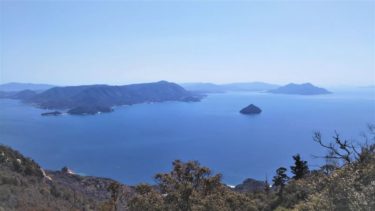
From a higher elevation, I could see the endless sea and the many small islands of the Seto Inland Sea.
The ride itself is short—only about 4 minutes—so don’t miss the chance to fully enjoy the scenery.
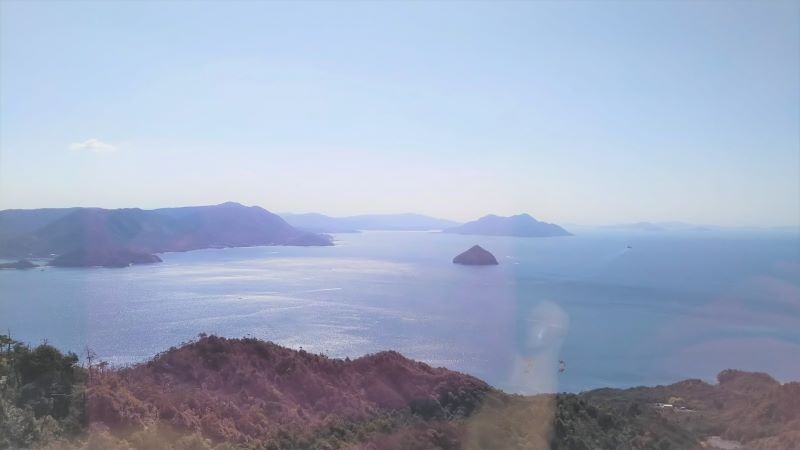
View from the reversible ropeway (my hand got in the shot 😅)
Arriving at Shishiiwa Station & A View Worth Climbing For
After about 30 minutes in total, I arrived at Shishiiwa Station.
Starting early in the morning really helped—there was almost no waiting time.
Later in the day, I saw long lines of people waiting for the ropeway, and it looked like a 20–30 minute wait.
If you’re planning to use the ropeway, I highly recommend going early.
Near the station, there are two directions: one leads to the observatory, and the other leads to the hiking trail toward the summit.
I first walked a short distance to the observatory.
Along the way, I found a sign with a quote by Ito Hirobumi, Japan’s first Prime Minister:
“The view from the summit of Mt. Misen represents the true value of Miyajima, one of the Three Most Scenic Spots of Japan.”
If the view from the top is really that incredible… then I have to see it for myself.
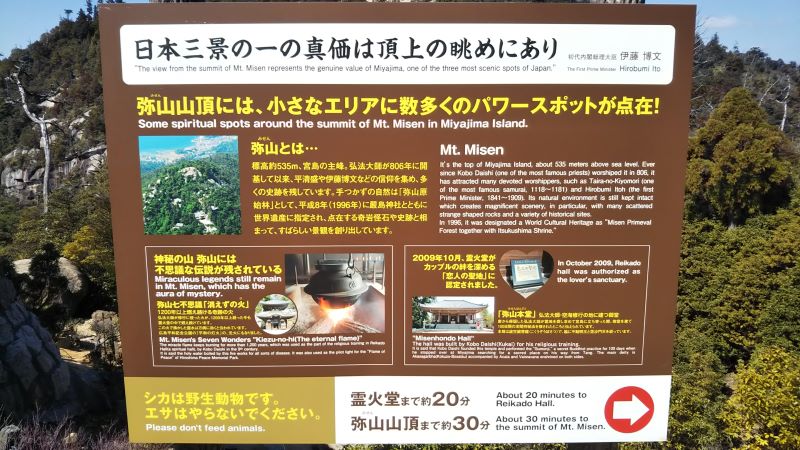
The signboard featuring Ito Hirobumi’s quote and hiking routes on Mt. Misen
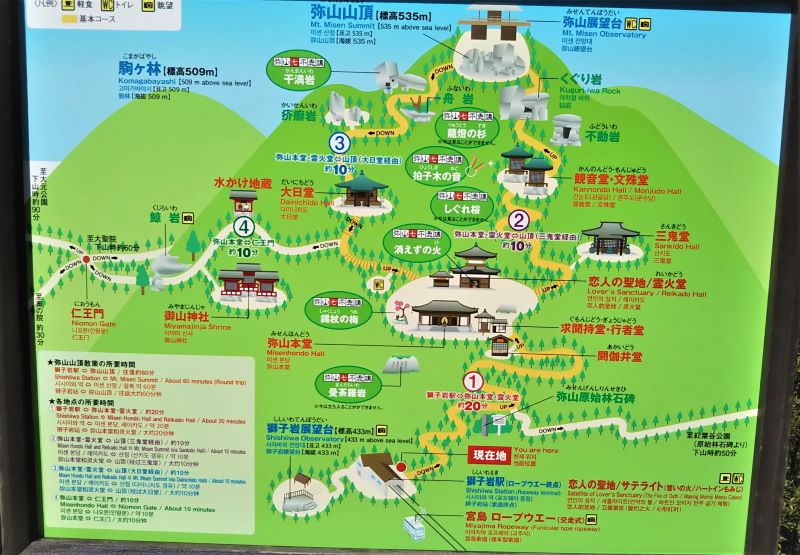
A detailed map showing the hiking routes and key spots on Mt. Misen
What Are the “Three Most Scenic Views of Japan”?
Miyajima is known as one of the “Three Most Scenic Views of Japan,” along with:
・ Matsushima (Miyagi Prefecture)
・ Amanohashidate (Kyoto Prefecture)
In Japan, there are many traditional “Top Three” lists like this—famous mountains, gardens, and scenic spots.
It’s a unique cultural way of appreciating and categorizing beauty.
A View That Feels Like a Movie
The observatory is just a short walk from the station, but the view is incredible.
Looking out over the Seto Inland Sea, I couldn’t help but think:
“This looks like a scene from a movie.”
The calm sea, scattered islands, and soft light—it all felt cinematic.
Many films have been set around the Seto Inland Sea.
For example, Twenty-Four Eyes and The Inland Sea are well-known classics.
I also thought about director Nobuhiko Obayashi, who was from Onomichi in Hiroshima Prefecture.
He made many films set in that town, where the hills and the sea almost feel like the main characters.
I’ve never been to Onomichi, but standing there, I found myself wanting to visit someday.
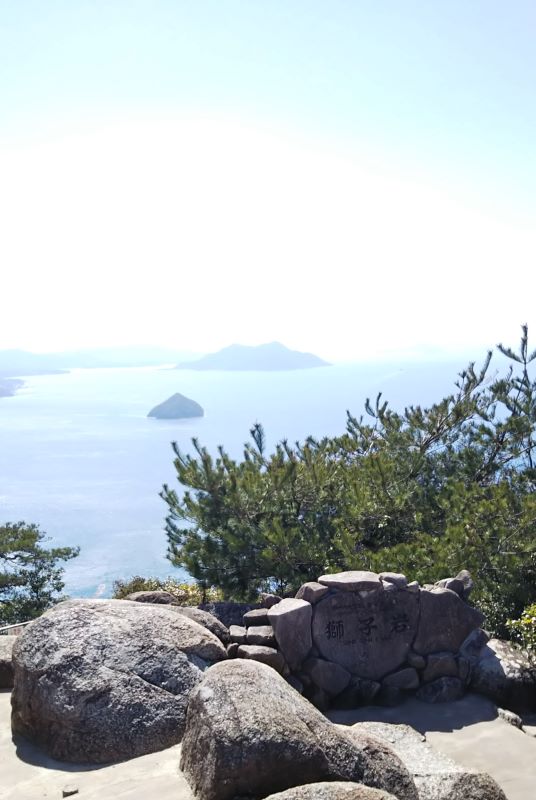
View of the Seto Inland Sea from the Shishiiwa Observatory
Rethinking “Tokyo Story”
Another film that came to mind was Tokyo Story by Yasujiro Ozu.
Although much of the film takes place in Tokyo, the family’s hometown is Onomichi.
When I first watched it when I was younger, I didn’t really understand it.
But as I got older, it started to resonate with me in a completely different way.
It’s the kind of film that changes depending on where you are in life.
Standing there, looking out over the sea, I thought:
“I want to watch Tokyo Story again.”
If you’re curious, you can easily find these films on streaming platforms like Prime Video.
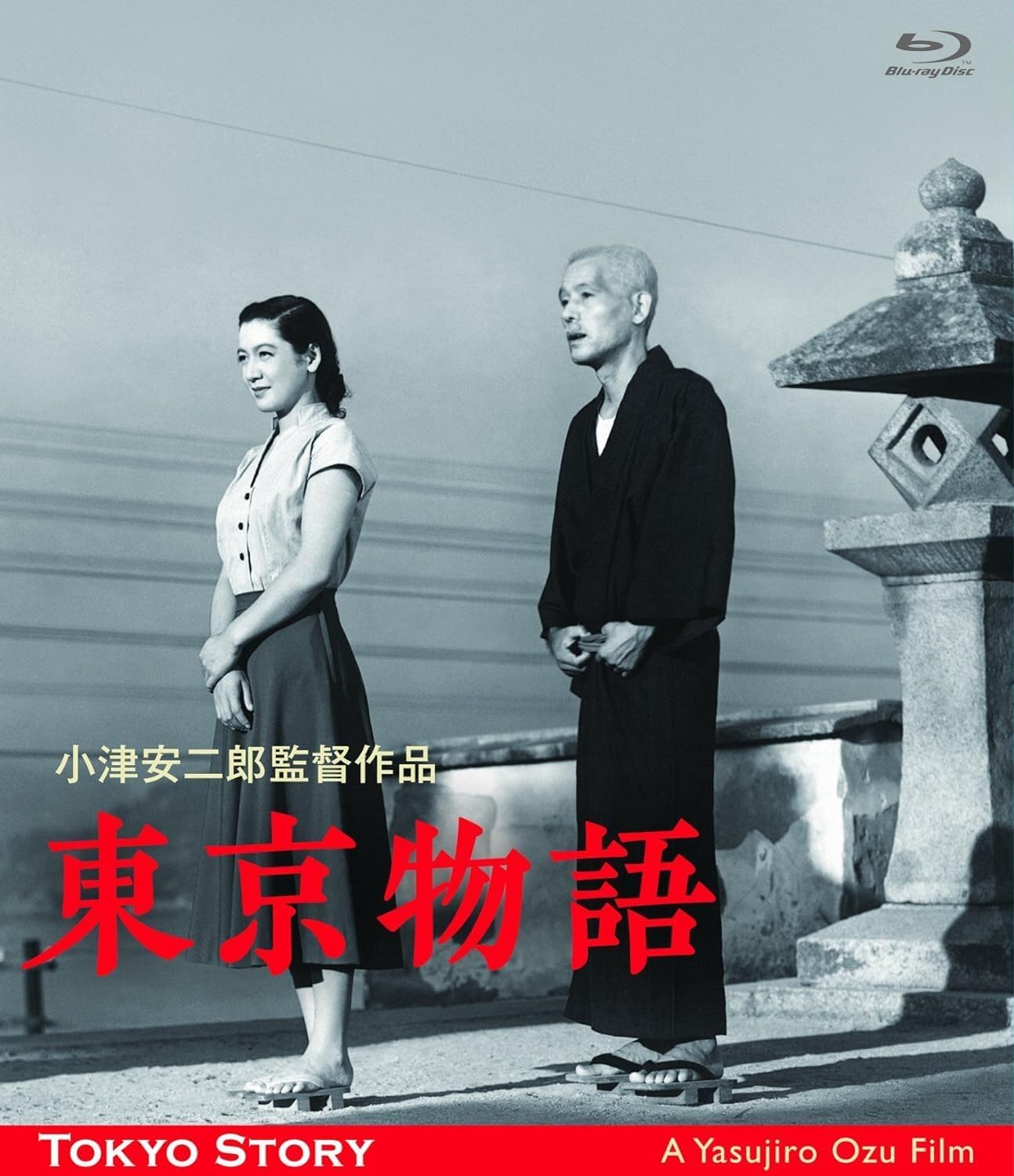
DVD cover of Tokyo Story — a film that reveals more as you grow older
Summary: Why the Ropeway Experience Is Worth It
To be honest, the scenery from the ropeway was one of the most memorable parts of this trip.
If you visit Miyajima, I highly recommend going beyond the shrine and exploring Mt. Misen as well.
Here are a few tips:
・ Go early in the morning to avoid long lines
・ Take your time and enjoy the scenery
・ Consider reservations during busy seasons
Next, I’ll continue my journey toward the summit of Mt. Misen. Read the next part →
Thanks for reading!
You can also read the Japanese version here:
 しめいの開運日誌" width="1000" height="353" >