
If you prefer reading in Japanese, you can check it here:
A solo trip to Hiroshima and Miyajima – Part 5.
If you’re new to this series, feel free to check out Part 1, where I share some recommended spots in Hiroshima.
This time, I’ll be walking from Shishiiwa Station, the final stop of the ropeway, all the way up to the summit of Mt. Misen.
Along the way, I’ll share my experience visiting highlights such as Reikado Hall, home to the famous “Eternal Flame” (Kiezu no Hi), as well as unique spots like Kuguri Rock and Fudo Rock. And of course, I’ll take you to the summit observatory, where a breathtaking 360-degree panoramic view awaits.
I hope this article will be helpful for those wondering about the hiking route on Mt. Misen, how long it takes, and how crowded the ropeway can get.
Now then—let’s set off in search of Mt. Misen’s spiritual power and stunning scenery!
You can also check the previous part here:
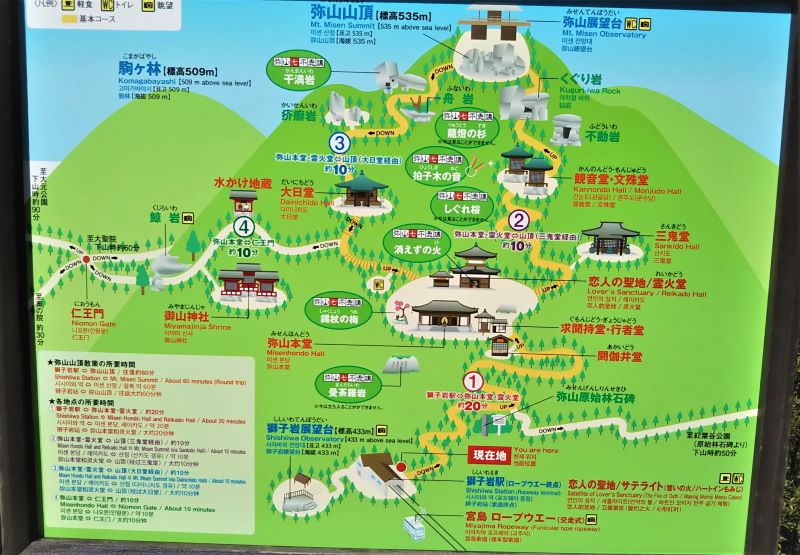
A detailed map showing the hiking routes and key spots on Mt. Misen
Shishiiwa Station and the “Flame of Promise”
From Shishiiwa Station, I began my walk toward the summit, stopping by various power spots along the way.
On the second floor of Shishiiwa Station, the final stop of the Miyajima Ropeway, there’s a rest house where you can grab a light meal. Since there are no places to eat further up the mountain, it might be a good idea to have something here before heading out.
Tucked away in a corner of the rest house is a monument called the “Flame of Promise.” Couples can press switches on either side, and a flame lights up as a symbol of their vow.
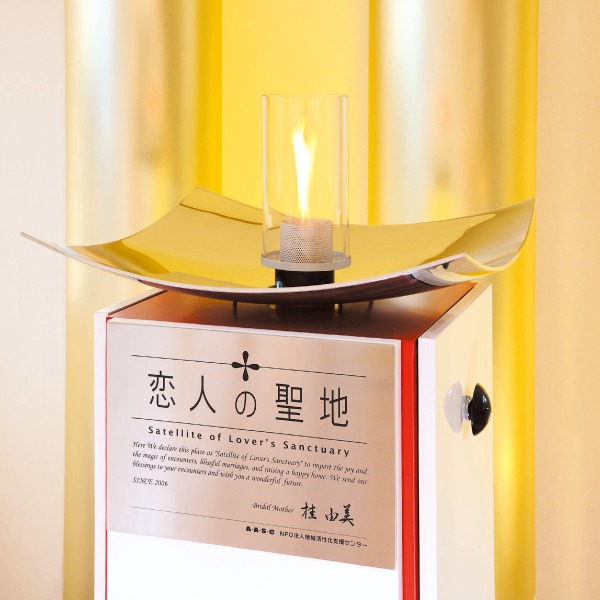
When two people press the buttons on either side, the “Flame of Promise” lights up.
Image source: Official website
Apparently, you can also make a heart-shaped momiji manju filled with sweet red bean paste here—how cute!
They also sell adorable souvenirs like the “Promise Bear” strap. I didn’t notice it at the time, but I really wish I had bought one!
Hiking Toward Reikado Hall and the “Eternal Flame”
Now, it was finally time to start hiking up Mt. Misen.
At the trail entrance, there was a clear and easy-to-read signboard. I decided to head toward the “Eternal Flame” located near the center of the route.
Walking along the trail, with beautiful views of the Seto Inland Sea to my left…
It was absolutely stunning.
That said, the trail was tougher than I expected, and it felt quite long.
There are almost no places to buy water along the way (except near Reikado Hall, where it’s quite expensive), so if you don’t have a bottle, make sure to buy one before starting your hike.
After walking steadily for about 20–30 minutes, I finally reached Misen Hondo (Main Hall), and right across from it stands Reikado Hall.
Inside Reikado Hall, there is a sacred fire known as the “Eternal Flame” (Kiezu no Hi), which has been kept burning for over 1,200 years since it was lit by Kobo Daishi in 806.
This flame is used to boil water, and the water is believed to have healing properties and bring good health.
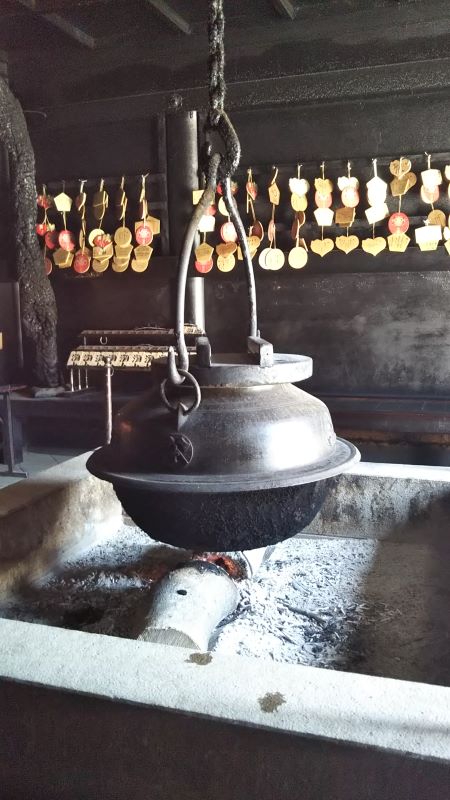
water heated by the “Eternal Flame”
Visitors are free to drink it, and it’s said to be beneficial for various ailments—so if you visit, definitely give it a try.
At first, I hesitated because no one else seemed to be drinking it, so I asked a monk just to be sure.
He kindly told me it was perfectly fine.
And once I started drinking, others followed one after another—it seemed everyone had just been holding back!
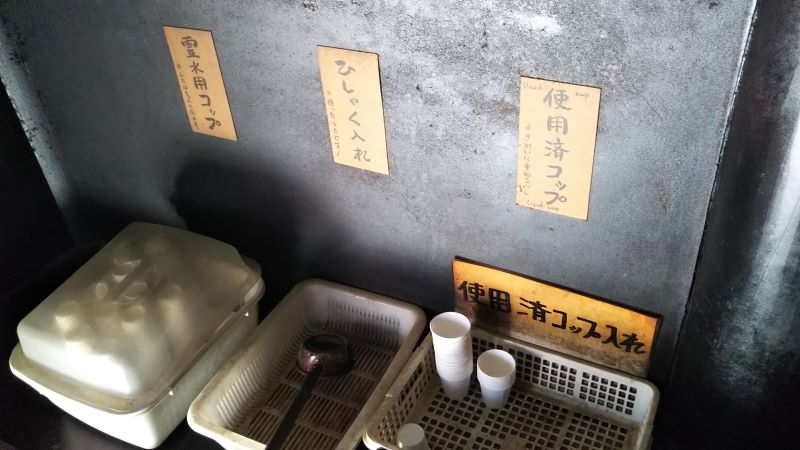
It’s free, so feel free to try it! Please return the cup to the tray on the right after drinking.
Ema (Prayer Plaques) and Local Traditions
Next to Reikado Hall, you can find charms and ema (wooden prayer plaques), including heart-shaped and daruma-shaped ones.
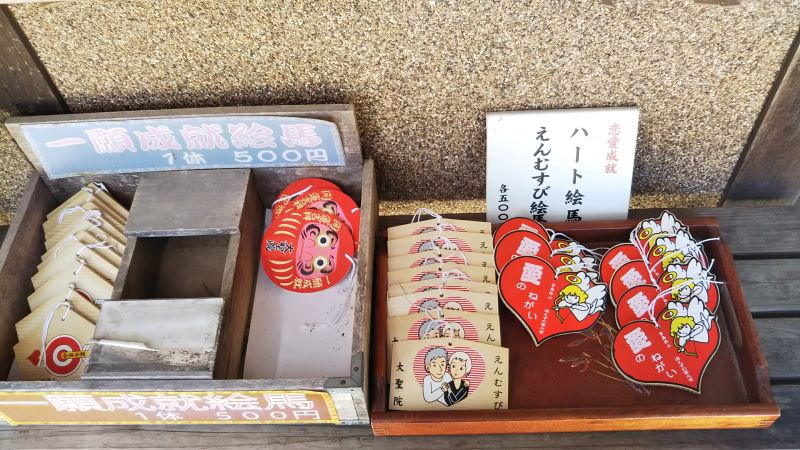
Various types of ema
Ema are small wooden plaques on which people write their wishes and dedicate them at shrines or temples. These days, many places across Japan create unique and beautifully designed ema and charms, which makes visiting them even more interesting.
At this particular spot, it is said that if you dedicate an ema here three times, your wish will come true.
But since I don’t think I’ll be visiting three times anytime soon, I just skipped it, haha.
Kuguri Rock and Fudo Rock Along the Trail
After spending more time than expected at Reikado Hall, I finally got moving again.
Luckily, the short break seemed to help, and the rest of the climb felt much easier.
Along the way, I came across several interesting spots, including a massive rock known as Kuguri Rock.
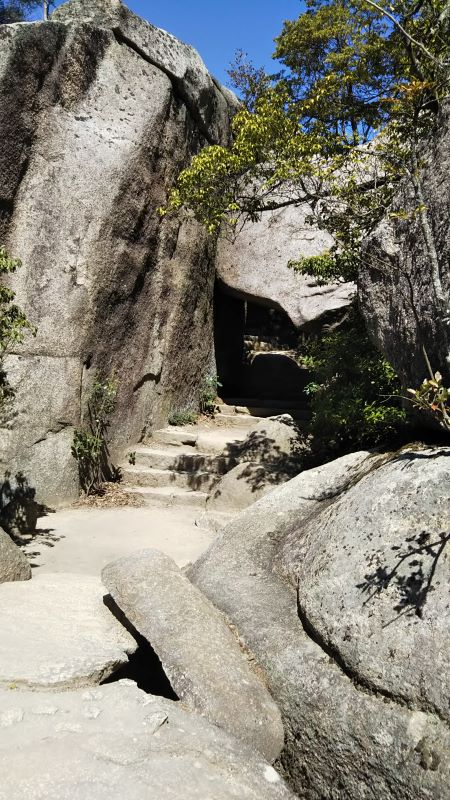
Kuguri Rock, a large rock you can walk through.
The name “Kuguri” means “to pass through” in Japanese.
Mt. Misen is dotted with these enormous rocks, and there’s even a theory that Miyajima was once a single giant rock. Seeing these unusual formations made the hike even more fascinating.
Right next to Kuguri Rock is Fudo Rock, where Fudo Myoo is enshrined.
It felt like there were little attractions scattered along the trail, making the hike enjoyable and far from boring.
Reaching the Summit and the Observatory View
Finally, I reached the summit!
Because I had made quite a few stops along the way, it’s hard to say exactly how long the hike would take without breaks, but for me, it took about an hour and a half in total.
The observatory at the summit has three levels, with the top level open to the sky, offering a full 360-degree panoramic view. There are also restrooms here.
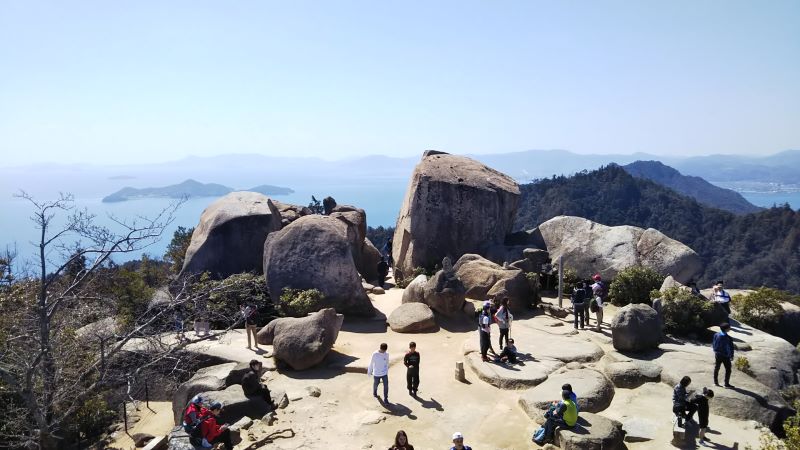
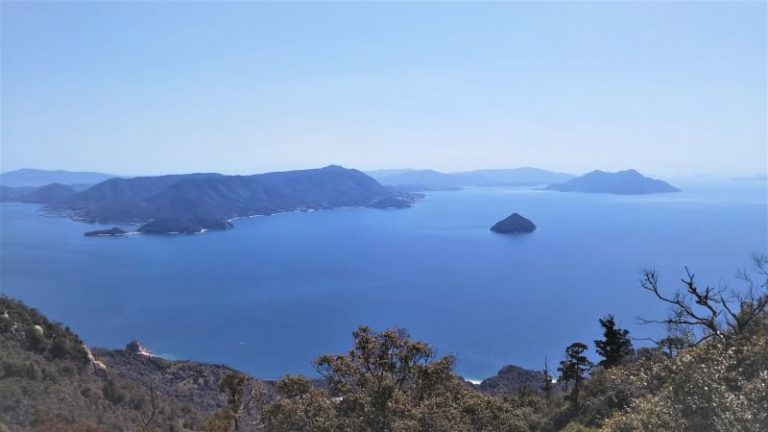
Views from the observatory and the many large rocks at the summit
The scenery from the top was absolutely incredible.
So many islands—more than I could count—scattered across the calm waters of the Seto Inland Sea.
As I gazed out at the view, I found myself imagining what life might be like on one of those small islands.
I just sat there, spacing out and taking it all in.
It truly felt like a place where you could stay for hours and never get tired of the view.
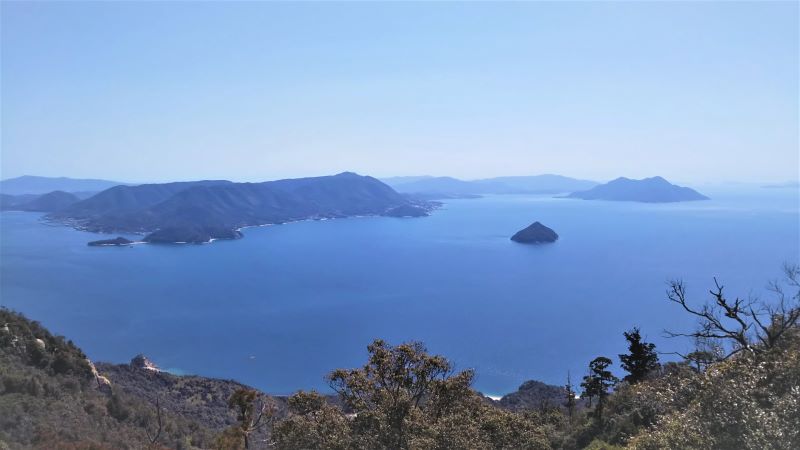
If you’re visiting Miyajima, I highly recommend hiking up Mt. Misen to see this view.
The True Value of Miyajima
“The true value of Miyajima, one of Japan’s Three Most Scenic Spots, lies in the view from the summit.”
A quote by Ito Hirobumi—and it couldn’t be more accurate.
I highly recommend seeing this breathtaking view for yourself.
Looking in another direction, I spotted Shishiiwa Station—the ropeway station I had started from earlier.
I couldn’t believe I had climbed all the way from there.
Honestly, I was impressed with myself.
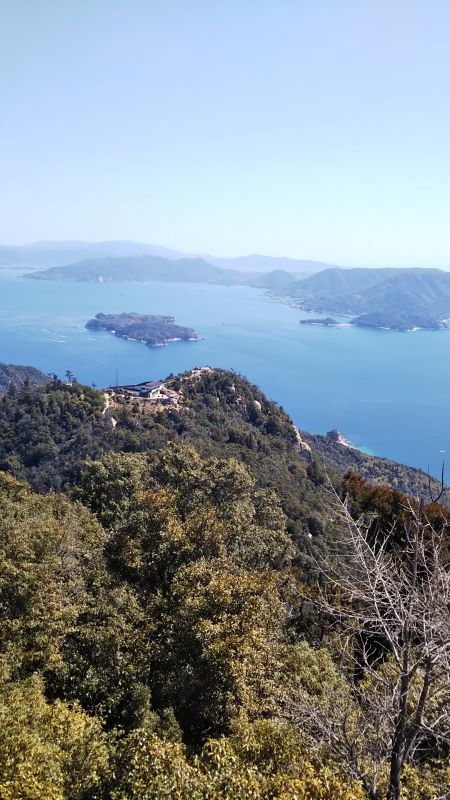
In the distance, Shishiiwa Station—the final stop of the ropeway—looked small.
Ropeway Crowds and Final Thoughts
After enjoying the view and recharging, I began my descent.
The way down felt much easier, almost as if the exhaustion from the climb had disappeared.
I made my way back to Shishiiwa Station in about 30 minutes without any detours.
However, the ropeway gets quite crowded in the afternoon.
When I arrived around 1 PM, there was already a long line at Kayatani Station for people heading up.
If possible, I recommend going early in the morning to avoid the crowds. During busy seasons, reservations may be available, so it’s worth checking in advance.
Mt. Misen was truly a special place where you can enjoy the sense of accomplishment from hiking, visit spiritual power spots, and take in breathtaking views—all in one trip.
It was physically demanding, but more than that, it felt incredibly refreshing and fulfilling.
If you haven’t been yet, I highly recommend visiting at least once.
Next time: a visit to the World Heritage site, Itsukushima Shrine!
Thank you so much for reading!
You can also read the Japanese version here:
 しめいの開運日誌" width="1000" height="353" >